India Rejects PoK Legislative Polls Amid Lok Sabha Tensions
NewsIndia Rejects PoK Legislative Polls Amid Lok Sabha Tensions
Government and opposition clash as new anti-paper leak law is debated in Lok Sabha, impacting legislative integrity.
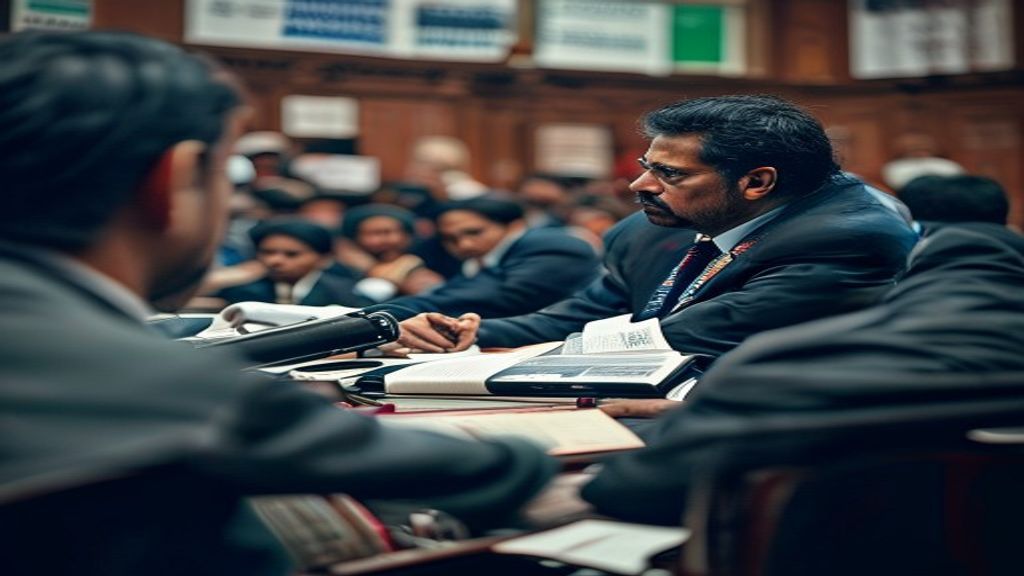
The Lok Sabha witnessed a heated debate on the proposed anti-paper leak law, as the government and opposition clashed over its implications. This discussion took place in New Delhi on October 23, 2023, amid rising concerns about the integrity of examinations and legislative processes in India. The focus keyword, Lok Sabha anti-paper leak law, highlights the critical nature of this legislative proposal aimed at curbing corruption in public examinations.
Government's Stance on the Anti-Paper Leak Law
The government strongly supports the Lok Sabha anti-paper leak law, arguing that it is essential for maintaining the integrity of public examinations. Officials claim that the law will introduce stringent measures to prevent leaks and ensure fair assessments. Furthermore, the government believes that this legislation will restore public confidence in the examination system.
In addition, the proposed law includes provisions for severe penalties against those found guilty of leaking examination papers. This includes both individuals and institutions involved in such activities. The government argues that these measures will act as a deterrent, ensuring that the examination process remains transparent and trustworthy.
Opposition's Concerns and Criticism
Conversely, the opposition raised significant concerns regarding the Lok Sabha anti-paper leak law. They argue that the government is using this legislation as a political tool rather than a genuine effort to combat corruption. Critics claim that the law may not address the root causes of paper leaks and could instead lead to further complications in the examination process.
Moreover, the opposition highlighted the need for a more comprehensive approach to tackle the issue of corruption in public examinations. They suggested that the government should focus on improving the overall educational infrastructure and implementing better training for examination officials. This, they argue, would be more effective than merely introducing punitive measures.
Legislative Context and Background
The discussion surrounding the Lok Sabha anti-paper leak law comes in the wake of several high-profile examination scandals in recent years. These incidents have raised alarms about the effectiveness of current measures to protect the integrity of public assessments. As a result, the government has prioritized this legislation to address these pressing concerns.
In recent months, various state governments have also faced scrutiny over their handling of examination processes. This has led to calls for a unified national framework to regulate public examinations more effectively. The Lok Sabha anti-paper leak law is seen as a step towards achieving this goal.
Implications for Future Legislative Processes
If passed, the Lok Sabha anti-paper leak law could have far-reaching implications for future legislative processes in India. Experts suggest that the law may set a precedent for how examination integrity is maintained across various sectors. This could lead to more stringent regulations and oversight in other areas of public administration.
Furthermore, the law may also influence public perception of the government’s commitment to transparency and accountability. As citizens become more aware of the measures being taken to combat corruption, their trust in the examination system may increase. This could ultimately lead to higher participation rates in public examinations.
Rejection of PoK Legislative Polls
In a related development, India has officially rejected the recent legislative polls held in Pakistan-occupied Kashmir (PoK). The Indian government criticized these elections as illegitimate and lacking in democratic integrity. Officials stated that the polls do not reflect the will of the people in the region and are merely a façade for Pakistan's control over PoK.
This rejection underscores India's long-standing position on the territorial integrity of Kashmir. The government continues to advocate for the rights of the people in PoK, emphasizing the need for a fair and transparent political process. The situation remains tense as diplomatic discussions continue regarding the future of the region.
Public Reaction and Future Developments
Public reaction to the Lok Sabha anti-paper leak law and the rejection of PoK legislative polls has been mixed. Many citizens support the government's efforts to enhance examination integrity, while others express skepticism about the effectiveness of the proposed measures. Additionally, the rejection of the PoK polls has sparked discussions about regional stability and the future of Kashmir.
As the Lok Sabha continues to debate the anti-paper leak law, stakeholders from various sectors are closely monitoring the developments. The outcome of this legislation could significantly impact public trust in the examination system and the political landscape in Kashmir. The coming weeks will be crucial in determining how these issues unfold.
Source: