Supreme Court Upholds Creative Freedom for Jagannath Movie
NewsSupreme Court Upholds Creative Freedom for Jagannath Movie
Supreme Court emphasizes artistic liberty, dismisses ban plea on animated film
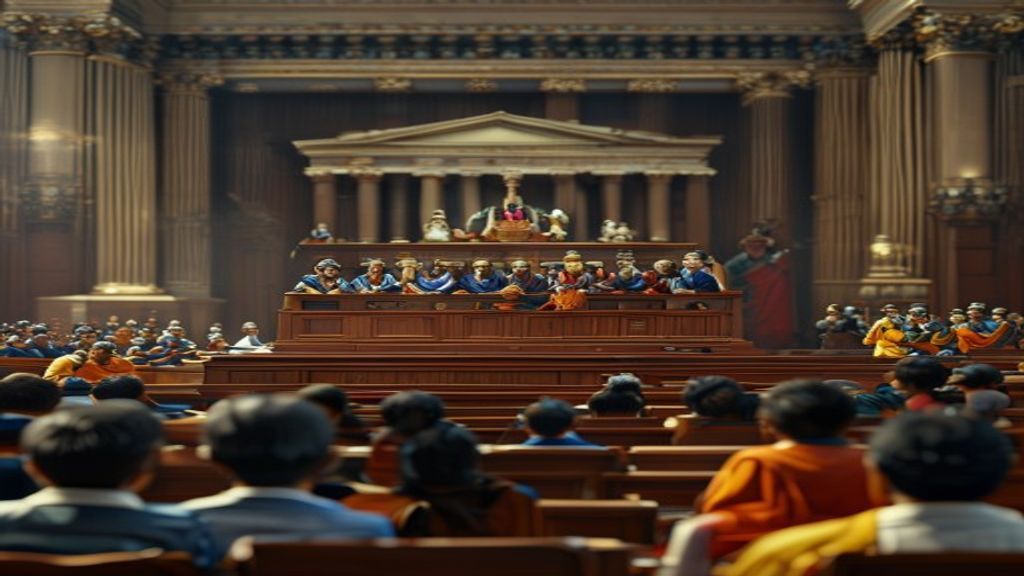
The Supreme Court recently dismissed a plea to impose a ban on the animated film centered around Mahaprabhu Jagannath. This ruling underscores the importance of creative freedom for artists, affirming that the depiction of deities should be met with tolerance. The court's decision highlights the need for artistic expression in the realm of religious storytelling, particularly in a diverse society like India.
Supreme Court's Ruling on Jagannath Movie Ban
The Supreme Court's ruling on the Jagannath movie ban reflects a significant stance on artistic expression. Justices emphasized that restricting artistic creativity based on objections from a minority would set a dangerous precedent. They pointed out that such restrictions could hinder numerous religious television programs and artistic endeavors that celebrate cultural heritage.
Furthermore, the court noted that the film had already received approval from the Censor Board. This approval indicates that the film meets the necessary guidelines for public viewing. As a result, the court found no grounds for judicial interference, reinforcing the idea that artistic works should not be stifled by individual objections.
Importance of Creative Expression in Art
Creative expression plays a crucial role in the arts, especially when it comes to religious themes. The Supreme Court's decision regarding the Jagannath movie ban serves as a reminder of the need for tolerance in artistic representations. Artists often draw inspiration from religious figures and stories, contributing to a rich tapestry of cultural narratives.
In addition, the court's ruling encourages artists to explore their creativity without fear of censorship. This freedom allows for diverse interpretations of religious themes, fostering dialogue and understanding among different communities. The ability to depict deities in various forms can lead to a deeper appreciation of cultural and spiritual beliefs.
Impact on Religious and Cultural Narratives
The Supreme Court's ruling on the Jagannath movie ban has broader implications for religious and cultural narratives in India. By allowing the film to be screened, the court acknowledges the importance of storytelling in preserving cultural identity. Animated films, like the one in question, can reach a wide audience, making religious stories accessible to younger generations.
Moreover, the ruling encourages filmmakers to create content that reflects the diversity of Indian culture. As a result, audiences can engage with their heritage in new and innovative ways. This approach not only enriches the cultural landscape but also promotes a sense of unity among various communities.
The Role of the Censor Board
The Censor Board plays a vital role in determining what content is suitable for public viewing. In the case of the Jagannath movie, the Supreme Court's reliance on the Censor Board's approval highlights its importance in the film industry. The board's guidelines are designed to ensure that films respect cultural sensitivities while allowing for creative expression.
However, the court's ruling also raises questions about the balance between censorship and artistic freedom. While the Censor Board aims to protect viewers from potentially offensive content, it must also recognize the value of diverse artistic interpretations. The Supreme Court's decision reinforces the idea that artistic works should not be unduly restricted, provided they adhere to established guidelines.
Future of Artistic Freedom in India
The Supreme Court's decision regarding the Jagannath movie ban sets a precedent for future cases involving artistic freedom in India. It signals a commitment to uphold the rights of artists to express themselves without fear of censorship. This ruling may encourage more filmmakers to explore themes related to religion and culture, knowing that their creative liberties are protected.
In addition, this case may inspire discussions about the role of art in society. As artists continue to push boundaries, it is essential for the legal system to support their right to do so. The Supreme Court's ruling serves as a reminder that artistic expression is a fundamental aspect of a vibrant and diverse society.
Conclusion
The Supreme Court's ruling on the Jagannath movie ban highlights the importance of creative freedom and tolerance in artistic expression. By dismissing the plea to ban the film, the court reinforces the idea that artistic works should be celebrated rather than censored. This decision not only protects the rights of artists but also enriches the cultural landscape of India, allowing for diverse narratives to flourish.
Source: