PM Modi Celebrates Mookerjee’s Role in Keeping Bengal United
NewsPM Modi Celebrates Mookerjee's Role in Keeping Bengal United
Prime Minister Modi highlights Mookerjee's impact on Bengal's unity with India during a recent event in Kolkata.
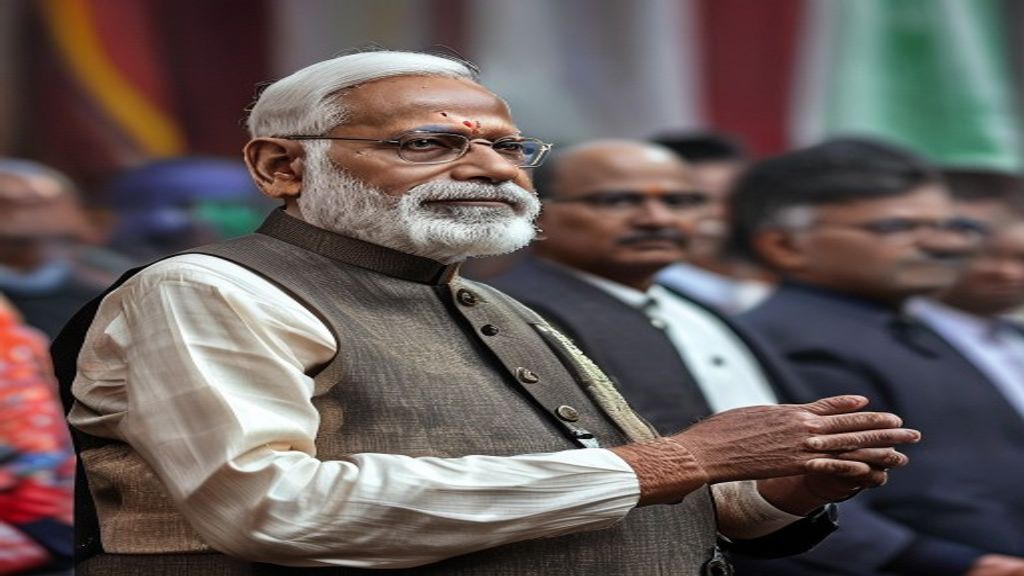
Prime Minister Narendra Modi recently honored the Mookerjee legacy in Kolkata, emphasizing the significant role Syama Prasad Mookerjee played in maintaining Bengal's unity with India during the tumultuous period of partition. This event took place as part of a broader initiative to recognize Mookerjee's contributions to the nation. Modi articulated how Mookerjee's vision for industrial growth laid the groundwork for key national institutions that bolstered India's economic strength.
During his address, Prime Minister Modi underscored Mookerjee's staunch opposition to the idea of separate constitutions and flags for different regions. He pointed out that Mookerjee's commitment to a unified India was unwavering, and his efforts were crucial in shaping the national identity. Furthermore, Modi highlighted how his government has worked to fulfill Mookerjee's dream by removing Article 370, which granted special status to Jammu and Kashmir, thereby reinforcing the idea of a unified nation.
Mookerjee's Vision for Economic Growth
Syama Prasad Mookerjee was not only a political leader but also a visionary who understood the importance of industrialization for India's progress. His initiatives led to the establishment of several key institutions that have played a vital role in the country's economic development. Mookerjee believed that a strong industrial base was essential for national strength and self-reliance.
Moreover, Mookerjee's policies aimed at fostering entrepreneurship and innovation. He encouraged the establishment of industries that would provide employment opportunities and stimulate economic growth. As a result, his legacy continues to influence India's economic policies today, inspiring new generations of leaders to prioritize industrial development.
The Importance of Unity in Mookerjee's Philosophy
Mookerjee's philosophy centered around the idea of national unity. He firmly believed that the strength of India lay in its ability to remain united despite its diverse cultures and languages. His opposition to separate flags and constitutions was rooted in this belief. He argued that such divisions would weaken the nation and undermine its integrity.
In addition, Mookerjee's efforts during the partition were crucial in ensuring that Bengal remained an integral part of India. His advocacy for a unified approach helped to mitigate the impact of the partition on the region. This commitment to unity is a significant aspect of the Mookerjee legacy that continues to resonate in contemporary discussions about national identity.
Modi's Commitment to Mookerjee's Ideals
Prime Minister Modi's recent remarks reflect a commitment to the ideals championed by Mookerjee. By removing Article 370, Modi's government aimed to honor Mookerjee's vision of a unified India. This decision was seen as a step towards fulfilling Mookerjee's dream of integrating all regions under a single constitutional framework.
Furthermore, Modi's emphasis on Mookerjee's legacy serves to inspire current and future leaders to prioritize national unity. The Prime Minister's actions and speeches highlight the importance of remembering historical figures like Mookerjee, who fought tirelessly for the nation's integrity. This focus on unity is essential in today's context, where divisive politics can threaten the fabric of society.
Celebrating Mookerjee's Legacy in Modern India
The celebration of Mookerjee's legacy is not just about honoring the past; it is also about shaping the future. Events like the one held in Kolkata serve to educate the public about Mookerjee's contributions and the values he stood for. By promoting awareness of his legacy, leaders can inspire a renewed commitment to national unity and progress.
Moreover, recognizing Mookerjee's impact on India's development encourages a dialogue about the importance of strong leadership in times of crisis. His ability to navigate the complexities of partition and advocate for a unified India is a lesson for contemporary leaders facing similar challenges. As India continues to grow and evolve, Mookerjee's legacy remains a guiding light for those who seek to uphold the principles of unity and integrity.
The Role of Education in Preserving Mookerjee's Legacy
Education plays a crucial role in preserving the Mookerjee legacy. Schools and universities can incorporate his teachings and philosophy into their curricula, ensuring that future generations understand the importance of unity and national identity. By educating young minds about Mookerjee's contributions, society can foster a sense of pride and responsibility towards maintaining the integrity of the nation.
In addition, public discussions and seminars can further promote awareness of Mookerjee's ideals. Engaging the community in conversations about his vision can inspire collective action towards achieving a united India. As a result, the Mookerjee legacy can continue to influence the nation's trajectory for years to come.
Source: News Feed

