Manusmriti Controversy Sparks Debate in Rajya Sabha Curriculum Tal
NewsManusmriti Controversy Sparks Debate in Rajya Sabha Curriculum Talks
Heated discussions arise over the inclusion of Manusmriti in educational curriculum amid political tensions.
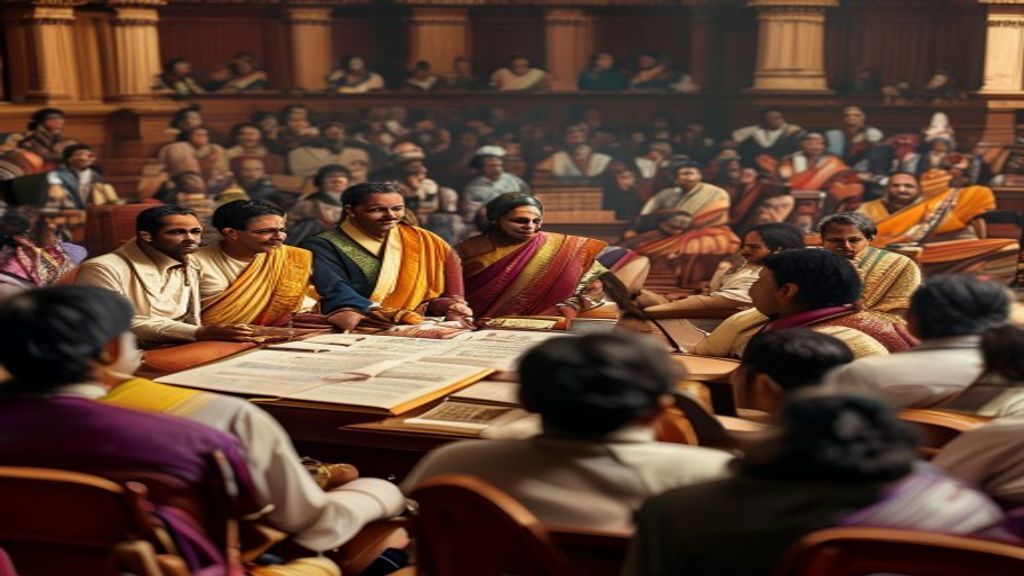
In a recent session of the Rajya Sabha, a heated debate erupted regarding the inclusion of the Manusmriti in the educational curriculum. Opposition leader Mallikarjun Kharge raised concerns about the influence of this ancient text on the BJP's proposed curriculum changes. The discussion took place during the deliberation of the Public Examinations Bill, highlighting the ongoing tensions surrounding educational reforms in India.
Manusmriti's Role in Educational Curriculum
The Manusmriti, an ancient Indian text, has long been a subject of controversy due to its perceived discriminatory verses. During the Rajya Sabha debate, Kharge pointed out that certain passages from the Manusmriti promote inequality, particularly against the Shudra community. He argued that these teachings should not be part of a modern educational framework that aims to promote equality and inclusivity.
Furthermore, Kharge challenged the BJP's stance on the curriculum, suggesting that it reflects a regressive approach to education. He emphasized the need for a curriculum that fosters critical thinking and respects the diverse cultural heritage of India. The inclusion of the Manusmriti, according to Kharge, undermines these values and could perpetuate social divisions.
Political Responses to the Manusmriti Debate
In response to Kharge's allegations, BJP president JP Nadda demanded that he produce the original Manusmriti manuscript for verification. Nadda's challenge aimed to question the authenticity of Kharge's claims regarding the text's content. This exchange highlights the political maneuvering surrounding the issue, as both parties seek to assert their narratives.
Meanwhile, BJP MP Sudhanshu Trivedi countered Kharge's arguments by referencing Dr. B.R. Ambedkar's writings. Trivedi suggested that Ambedkar's interpretations of the Manusmriti provide a different perspective on its relevance. This counterpoint aims to shift the focus from the text's controversial aspects to its historical context and the evolution of social thought in India.
Implications for Educational Policy
The debate over the Manusmriti curriculum raises significant questions about educational policy in India. As lawmakers discuss the Public Examinations Bill, the inclusion of texts like the Manusmriti could influence the direction of future educational reforms. Critics argue that incorporating such texts may hinder progress toward a more equitable education system.
In addition, the controversy underscores the broader struggle between traditional values and modern educational practices. As India continues to evolve, the challenge lies in balancing respect for historical texts with the need for a curriculum that promotes social justice and equality.
Public Reaction to the Manusmriti Inclusion
Public reaction to the Manusmriti's potential inclusion in the curriculum has been mixed. Supporters of the BJP argue that understanding historical texts is crucial for cultural education. They believe that the Manusmriti can provide insights into India's past and its social structures.
Conversely, many activists and educators express concern over the implications of teaching such a text. They argue that it could reinforce outdated social hierarchies and discriminatory practices. As a result, public discourse continues to evolve, reflecting the diverse opinions on how history should be taught in schools.
The Future of Curriculum Development
Looking ahead, the future of curriculum development in India will likely be shaped by ongoing debates like the one surrounding the Manusmriti. Policymakers must navigate the complexities of incorporating historical texts while ensuring that education promotes inclusivity and equality.
Furthermore, as discussions progress, it is essential for stakeholders to engage in constructive dialogue. This approach will help create a curriculum that honors India's rich cultural heritage while also addressing contemporary social issues. The outcome of these debates will have lasting implications for the educational landscape in India.
Source: