Supreme Court Orders Government to Provide Site for Friday Namaz
NewsSupreme Court Orders Government to Provide Site for Friday Namaz
SC directs authorities to find alternative location for Friday prayers amid Bhojshala dispute.
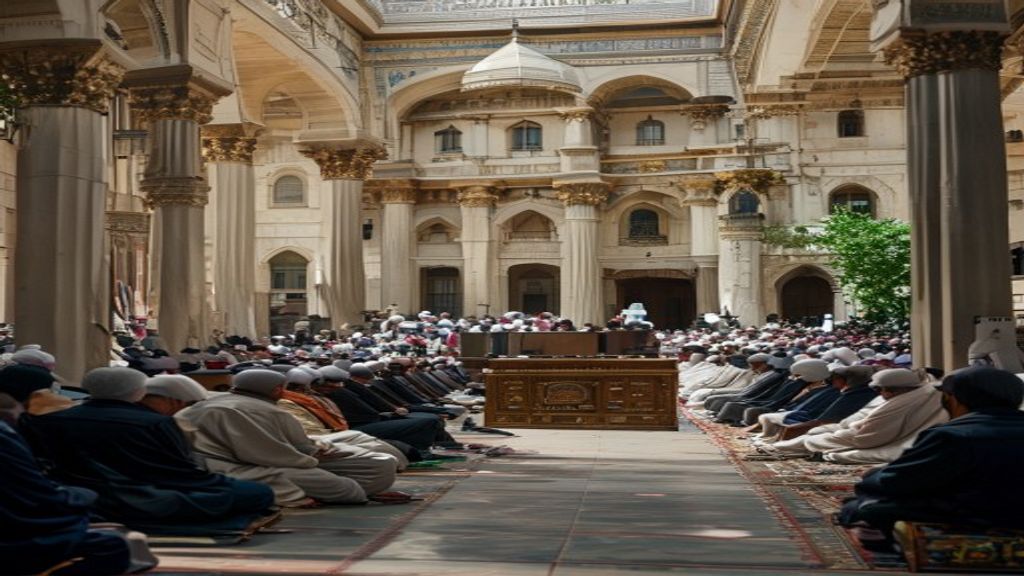
The Supreme Court of India has intervened in the ongoing Bhojshala complex dispute by asking the government to identify a nearby site for Friday Namaz. This decision comes in light of the tensions surrounding the Bhojshala complex in Dhar, Madhya Pradesh, where both Hindu and Muslim communities have laid claim to the site. The court's directive aims to ensure that the Muslim community can continue their prayers without disruption, highlighting the need for a peaceful resolution to the ongoing conflict.
Background of the Bhojshala Dispute
The Bhojshala complex has been a contentious site for years, with historical claims from both Hindus and Muslims. The Hindu community believes the site is associated with the worship of the sage Dattatreya, while Muslims regard it as a mosque known as the Jumma Masjid. This clash of beliefs has led to numerous legal battles and communal tensions. The Supreme Court's recent ruling seeks to alleviate some of these tensions by providing an alternative location for Friday Namaz.
Furthermore, the court's involvement underscores the importance of maintaining communal harmony in a diverse nation like India. The government has been tasked with identifying a suitable site that can accommodate the Muslim community for their Friday prayers. This move is seen as a step towards fostering dialogue and understanding between the two communities.
Implications of the Supreme Court's Ruling
The Supreme Court's directive to provide a Friday Namaz site carries significant implications for both communities involved. For the Muslim community, having a designated location for prayers is crucial for maintaining their religious practices. It allows them to gather and worship without fear of conflict or disruption. As a result, this ruling may help to ease tensions and promote a sense of security among the worshippers.
In addition, the government's response to the court's order will be closely monitored. Authorities are expected to act swiftly to identify a suitable location that meets the needs of the Muslim community. This action could serve as a precedent for resolving similar disputes in the future, emphasizing the role of the judiciary in maintaining peace and order.
Reactions from the Community
Reactions to the Supreme Court's ruling have been mixed among the local communities. Many in the Muslim community have expressed relief at the prospect of having a designated Friday Namaz site. They view this as a positive step towards ensuring their right to practice their religion freely. Meanwhile, some members of the Hindu community have raised concerns about the implications of the ruling on their historical claims to the Bhojshala complex.
However, community leaders from both sides have called for calm and dialogue. They emphasize the importance of finding a peaceful resolution that respects the beliefs of both communities. This collaborative approach may pave the way for a more harmonious coexistence in the future.
Government's Role in Resolving the Conflict
The government plays a crucial role in resolving the Bhojshala complex dispute and ensuring that the Friday Namaz site is established. Authorities must act transparently and inclusively, engaging with both communities to find a solution that respects their historical and religious claims. This process will require careful consideration and sensitivity to the feelings of both Hindus and Muslims.
Moreover, the government must ensure that the chosen site for Friday Namaz is accessible and meets the needs of the worshippers. This includes considering factors such as location, capacity, and facilities. By taking these steps, the government can demonstrate its commitment to upholding religious freedom and promoting communal harmony.
Future of the Bhojshala Complex
Looking ahead, the future of the Bhojshala complex remains uncertain. The Supreme Court's ruling may set a precedent for how similar disputes are handled in India. As the government works to identify a Friday Namaz site, it will also need to address the broader issues surrounding the complex. This includes engaging in dialogue with community leaders and exploring potential compromises that honor the historical significance of the site for both Hindus and Muslims.
Furthermore, the resolution of this dispute could have far-reaching effects on communal relations in the region. It may serve as a model for other areas facing similar conflicts, promoting a culture of understanding and respect among diverse religious groups. The ongoing situation at the Bhojshala complex will be closely watched as a litmus test for India's commitment to religious tolerance and coexistence.
Source: