Vikram’s Hop Reveals Surficial Layers Near Lunar South Pole
NewsVikram's Hop Reveals Surficial Layers Near Lunar South Pole
India's Vikram lander uncovers vital geological layers at the moon's south pole.
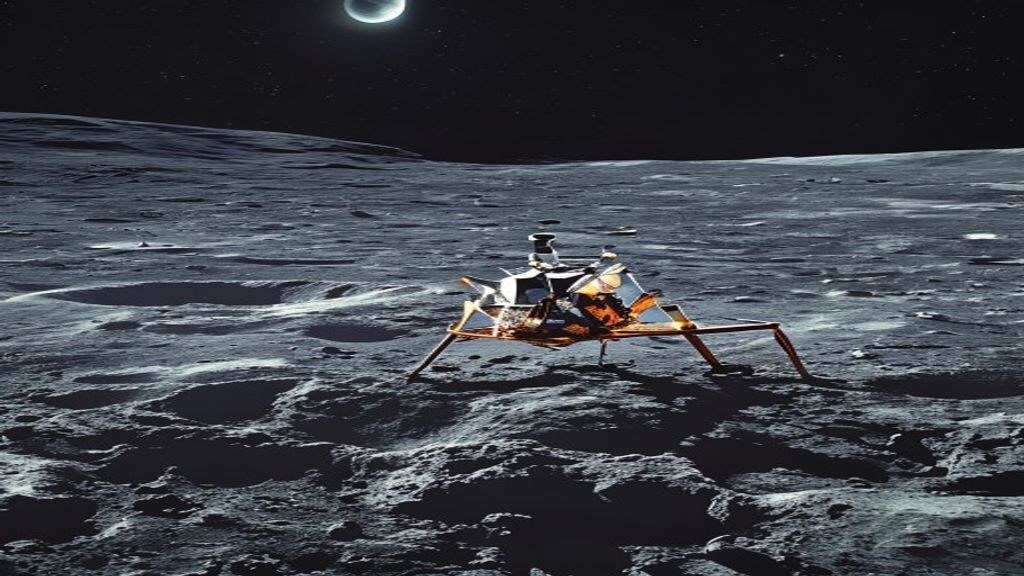
India's Vikram lunar mission has made significant strides in lunar exploration by uncovering surficial layers near the moon's south pole. This groundbreaking achievement took place during its recent hop maneuver, which allowed the lander to analyze the geological features of this unexplored region. The mission, launched by the Indian Space Research Organisation (ISRO), aims to enhance our understanding of the moon's composition and history.
The Vikram lander successfully executed its hop on October 14, 2023, marking a pivotal moment in lunar research. This maneuver not only demonstrated the lander's capabilities but also provided valuable data about the moon's surface. The findings from this mission could reshape our understanding of lunar geology and pave the way for future explorations.
Vikram Lunar Mission Overview
The Vikram lunar mission is part of India's ambitious Chandrayaan-3 program. Launched on July 14, 2023, the mission's primary goal is to explore the lunar south pole region, which is believed to hold crucial resources. The lander, equipped with advanced scientific instruments, aims to study the moon's surface and gather data on its mineral composition.
Furthermore, the mission's objectives include assessing the presence of water ice and other volatiles. These resources are essential for future lunar exploration and potential human settlement. The Vikram lander has already provided insights into the moon's surface, and its recent hop maneuver has further expanded its research capabilities.
The Importance of the Lunar South Pole
The lunar south pole is a region of great interest to scientists and researchers. This area is thought to contain water ice, which could be vital for sustaining future lunar missions. The presence of water would not only support human life but also serve as a resource for fuel and oxygen production.
In addition, the south pole's unique geological features offer a window into the moon's history. By studying these surficial layers, scientists can gain insights into the moon's formation and evolution. The Vikram lunar mission aims to unlock these secrets, contributing to our understanding of both the moon and the broader solar system.
Vikram's Hop Maneuver
The recent hop maneuver executed by Vikram was a significant technical achievement. This maneuver allowed the lander to traverse a distance of approximately 30 meters, landing in a new area of interest. The hop was carefully planned to ensure the safety and success of the mission.
As a result of this maneuver, Vikram was able to analyze different geological layers that were previously inaccessible. The data collected during this hop will be crucial for scientists as they interpret the moon's surface composition. This innovative approach showcases ISRO's commitment to advancing lunar exploration technology.
Scientific Instruments on Vikram
Vikram is equipped with a suite of scientific instruments designed to conduct detailed analyses of the lunar surface. These instruments include a terrain mapping camera, a laser-induced breakdown spectroscope, and a thermal probe. Each of these tools plays a vital role in gathering data about the moon's composition and geological features.
Moreover, the terrain mapping camera captures high-resolution images of the lunar surface, allowing scientists to study its topography. The laser-induced breakdown spectroscope analyzes the elemental composition of the lunar soil, providing insights into its mineralogy. Together, these instruments enhance the Vikram lunar mission's ability to conduct comprehensive research.
Future Implications of Vikram's Findings
The findings from the Vikram lunar mission have far-reaching implications for future lunar exploration. Understanding the surficial layers near the lunar south pole could inform the design of future missions. This knowledge will be essential for planning sustainable human presence on the moon.
Furthermore, the data collected may also influence the search for extraterrestrial life. The presence of water ice and other volatiles could indicate the potential for life-sustaining conditions. As scientists analyze the information gathered by Vikram, they will continue to explore the possibilities that lie beyond our planet.
Collaboration and Global Impact
The Vikram lunar mission exemplifies international collaboration in space exploration. ISRO has partnered with various global space agencies and research institutions to enhance the mission's scientific output. This collaboration fosters knowledge sharing and innovation, benefiting the global scientific community.
In addition, the success of the Vikram lunar mission inspires other nations to pursue their lunar exploration goals. As countries around the world invest in space technology, the collective efforts will advance our understanding of the moon and its resources. The Vikram mission stands as a testament to the potential of international cooperation in achieving remarkable scientific milestones.
Source: