Ulterior motives in FIR.
News LATESTLAW.COM, LIVE LAW .IN, greater kashmir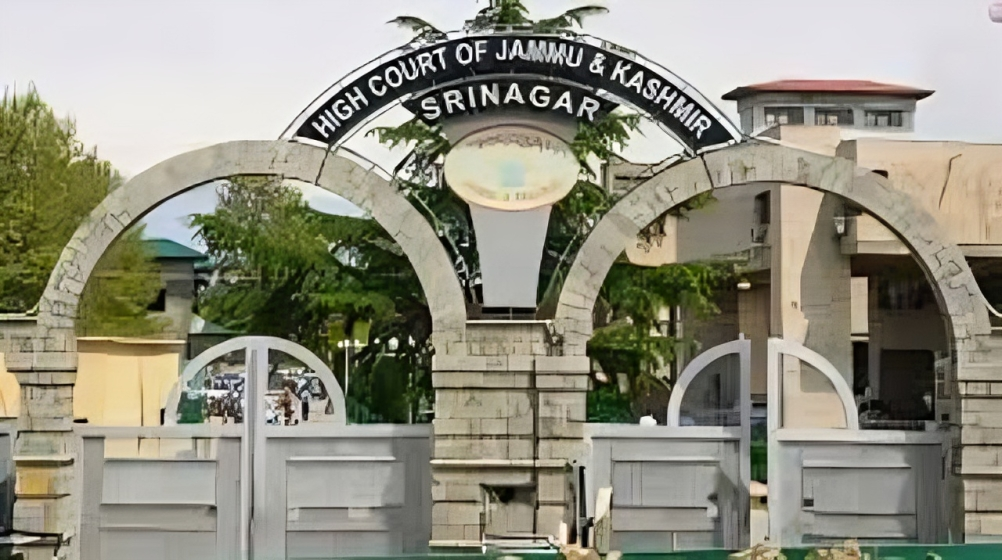
The Jammu and Kashmir and Ladakh High Court has recently emphasized that an FIR (First Information Report) is not automatically invalid merely because it follows a prior civil or criminal case. However, if an FIR is filed shortly after such proceedings, courts must scrutinize the circumstances to determine if there are ulterior motives behind its registration.
In a notable case, the High Court quashed an FIR registered on the directions of a trial court in a civil matter. The bench observed that while courts are empowered to take cognizance of disobedience or breach of their orders, the provisions under Order 39 Rule 2-A of the Civil Procedure Code (CPC) are intended to maintain the majesty of judicial orders and preserve the rule of law. The court held that such powers should be exercised without any element of vindictiveness, and in this case, the trial court’s order directing the registration of an FIR was found to be without power and authority .
This ruling aligns with the court’s earlier stance that, in cases involving potentially vexatious proceedings, courts have a duty to examine the attending circumstances beyond the allegations in the FIR. The court emphasized that it is not just enough to look into the averments made in the FIR or complaint alone; the overall circumstances leading to the initiation of the case must also be considered to prevent the misuse of the legal process .
Therefore, while an FIR is not inherently invalid due to the existence of prior legal proceedings, courts must carefully assess the timing and context of its filing to ensure that it is not being used as a tool for ulterior motives.
Sources
