After HC scrutiny, Rajasthan govt withdraws ‘Udaipur Files’ cut order
News THE ECONOMIC TIMES, livelaw.in, LAW, LAWYERS NEAR ME, LAWYERS NEAR BY ME, LIVE LAW, THE TIMES OF INDIA, HINDUSTAN TIMES, the indian express, LIVE LAW .INHigh Court challenges state’s power to impose film edits without CBFC backing
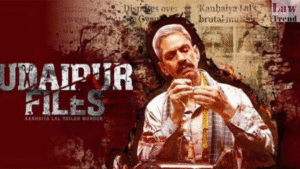
Jaipur, August 2, 2025 – The Rajasthan government has withdrawn the Udaipur Files cut order after court scrutiny. The High Court questioned the state’s authority to censor films. It affirmed that only the CBFC film certification authority can legally demand edits.
The decision followed a PIL against the state’s July 25 order asking Udaipur Files makers to cut scenes seen as provocative. The court, in its observations, stated that such interference could set a dangerous precedent and encroach upon the CBFC’s jurisdiction.
Advocate General M S Singhvi, representing the Rajasthan government, informed the bench that the impugned order had been withdrawn. The government admitted procedural overreach and accepted it lacked authority to impose such restrictions on its own. Consequently, this move came after Justice Anoop Kumar Dhand asked the state to clarify the statutory basis of its directive.
The film, based on the gruesome 2022 killing of tailor Kanhaiya Lal in Udaipur, has stirred political and social reactions. The incident, which allegedly had links to religious extremism, had led to nationwide protests and tightened law enforcement in Rajasthan. Although the government cited public order, critics still called it unlawful censorship.
Justice Dhand said only the CBFC, under the Cinematograph Act of 1952, can certify or order film cuts. He stated that any government attempting to bypass this statutory mechanism undermines the rule of law. “No parallel system of censorship can exist,” he said.
Since the CBFC had already cleared the film, the petitioner argued the state couldn’t demand more cuts. Moreover, the plea accused the government of misusing law-and-order claims to suppress dissenting art and media.
Legal experts noted that the case has broader implications for federalism and freedom of expression. “This case reaffirms that artistic content, once certified by the CBFC, cannot be selectively altered by any state. The Supreme Court has already upheld this principle in multiple cases,” said Supreme Court advocate Radhika Joshi.
The withdrawal of the order now allows the film to continue its run in Rajasthan without any modifications. However, it also highlights growing tensions between state powers and central authorities over media regulation. The case could set a precedent for future disputes involving films with politically or socially sensitive content.
Source

