Rahul Gandhi Denounces Election Rigging in Lok Sabha Debate
NewsRahul Gandhi Denounces Election Rigging in Lok Sabha Debate
Accuses Election Commission of Collusion with BJP and Criticizes RSS Influence
India, December 9, 2025, Tuesday, 2025
India, October 25, 2023, Wednesday, 2023
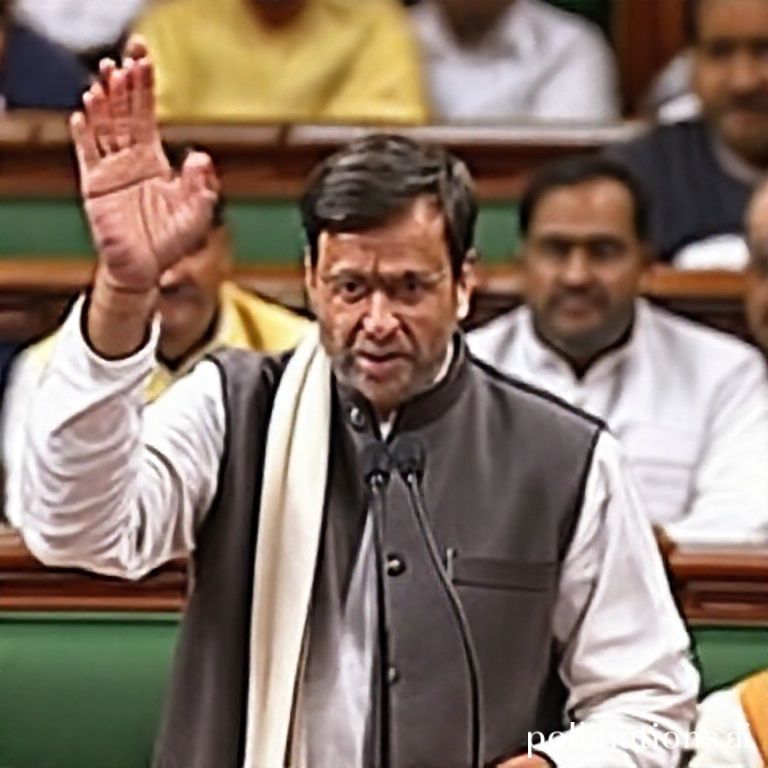
In a heated session in the Lok Sabha, Rahul Gandhi delivered a scathing critique of the Election Commission of India (ECI). He accused the commission of colluding with the Bharatiya Janata Party (BJP) to manipulate electoral outcomes. Gandhi's remarks came during a debate on the significance of free and fair elections in the country. He labeled the act of "vote chori" as the most significant anti-national act, emphasizing the need for transparency in the electoral process.
Gandhi's comments were not merely rhetorical. He raised serious concerns about the integrity of the electoral system. He pointed out the recent removal of the Chief Justice of India (CJI) from the selection panel for the Election Commission. This change, he argued, undermines the independence of the ECI and raises questions about its impartiality. The Congress leader insisted that such moves are part of a broader strategy to consolidate power and diminish democratic institutions.
The debate intensified as Gandhi shifted his focus to the Rashtriya Swayamsevak Sangh (RSS). He accused the organization of systematically capturing national institutions. According to him, the RSS is infiltrating key bodies, including intelligence agencies and investigative organizations. This infiltration, he claimed, is aimed at suppressing dissent and stifling opposition voices.
Gandhi's allegations are not new. Critics of the BJP have long accused the party of undermining democratic norms. However, Gandhi's direct confrontation in the Lok Sabha brought these issues to the forefront of national discourse. He urged fellow parliamentarians to recognize the gravity of the situation and to stand against what he termed as an assault on democracy.
The Congress party has been vocal about its concerns regarding the ECI's functioning. Gandhi's statements reflect a growing unease within the opposition regarding the electoral landscape. The Congress leader called for a united front against what he described as an erosion of democratic values. He emphasized that safeguarding democracy is a collective responsibility that transcends party lines.
In his address, Gandhi also highlighted specific instances that he believes illustrate the ECI's bias. He cited recent elections where he claims irregularities occurred. These examples, he argued, demonstrate a pattern of behavior that favors the ruling party. He urged the ECI to restore public confidence by ensuring fair practices in future elections.
Transitioning to the broader implications of these issues, Gandhi warned that the erosion of democratic institutions could have dire consequences for the nation. He stressed that a healthy democracy relies on the checks and balances provided by independent institutions. Without these safeguards, he argued, the very fabric of Indian democracy is at risk.
The Lok Sabha session saw heated exchanges as members from various parties reacted to Gandhi's statements. Some members of the BJP dismissed his claims as baseless. They argued that the ECI operates independently and that the opposition's accusations are merely attempts to deflect attention from their own electoral failures. This back-and-forth highlighted the deepening political divide in the country.
Gandhi's remarks also resonated with many citizens who are increasingly concerned about the state of democracy in India. Public sentiment appears to be shifting, with many calling for greater accountability from elected officials. The Congress party is leveraging this sentiment to galvanize support ahead of upcoming elections.
As the debate continued, Gandhi reiterated the importance of a transparent electoral process. He called for reforms that would enhance the ECI's credibility. These reforms, he suggested, should include measures to ensure that the selection of commissioners is free from political influence. He emphasized that restoring public trust in the electoral process is essential for the health of democracy.
The session concluded with Gandhi's impassioned plea for unity among opposition parties. He urged them to come together to protect democratic institutions from what he described as an authoritarian drift. His call for solidarity reflects a broader strategy by the Congress party to position itself as the primary defender of democracy in India.
In the aftermath of the debate, political analysts are closely monitoring the implications of Gandhi's statements. The opposition's response to the ruling party's actions will be crucial in shaping the political landscape in the coming months. As the nation approaches the next election cycle, the discourse surrounding electoral integrity is likely to intensify.
The Lok Sabha debate serves as a reminder of the ongoing struggle for democratic values in India. With accusations of collusion and manipulation at the forefront, the need for vigilance and accountability remains paramount. The future of Indian democracy may hinge on the ability of its institutions to withstand political pressures and uphold the principles of free and fair elections.
Source:

