President Murmu Becomes First Head of State to Take Sortie in Rafa
News THE ECONOMIC TIMES, livelaw.in, LAW, LAWYERS NEAR ME, LAWYERS NEAR BY ME, LIVE LAW, THE TIMES OF INDIA, HINDUSTAN TIMES, the indian express, LIVE LAW .IN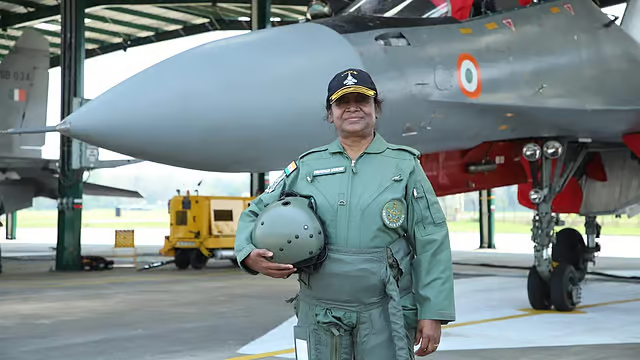
In a landmark flight at Ambala Air Force Station, President Murmu underscores India’s modern air-power and her role as Supreme Commander of the Armed Forces.
NEW DELHI | October 29, 2025
In a significant show of confidence in India’s defence capabilities and a symbolic affirmation of the head of state’s role as Supreme Commander of the armed forces, President Droupadi Murmu on Wednesday undertook a sortie in a French-made Rafale fighter jet at the Air Force Station Ambala in Haryana.
The sortie marked a historic milestone: President Murmu became the first president of India to fly in a Rafale-class multirole combat aircraft. The event underscores not just the ceremonial role of the President, but mirrors the deeper strategic trajectory of India’s air-power ambition.
The Sortie and Its Setting
On the crisp morning of October 29, 2025, President Murmu arrived at Air Force Station Ambala, donning a pilot’s helmet and flight-suit over her official uniform, preparing for the mission alongside senior officers of the Indian Air Force (IAF). The sortie aboard a Rafale fighter jet – a platform inducted into India’s air fleet in 2020 – was carried out under supervision of the IAF’s senior leadership.
In statements issued afterwards, officials emphasised that the flight had both symbolic and operational significance: symbolically, for the Commander-in-Chief of India’s armed forces to take the controls of the country’s most advanced fighter; operationally, as an endorsement of the Rafale fleet’s readiness and the IAF’s evolving strategic posture.
Why It Matters
The Rafale jet is regarded as a leap in India’s combat air-capability. Designed by French aerospace major Dassault Aviation, the aircraft combines advanced avionics, multirole strike capability and network-centric features. The fact that the President chose this platform for her sortie signals two things: first, the confidence India places in the Rafale series; second, the broader message of India’s readiness, deterrence and modernisation of its defence forces.
For President Murmu, the sortie builds on an earlier experience: she had flown in a Sukhoi-30 MKI fighter jet in April 2023. But unlike that flight, this sortie stands out because it is the first time a sitting Indian president has flown a Rafale – making it a landmark moment.
Strategic & Symbolic Dimensions
Beyond ceremony, the mission carries strategic resonance. The Ambala base is one of the prominent air-force stations, and the Rafale jets stationed there regionally bolster India’s air-defence architecture. In the wake of evolving regional threats and expanding security responsibilities, such displays gain heightened significance. Analysts interpret the sortie as a subtle yet clear signal of India’s resolve to maintain air-dominance and high readiness.
On the symbolic front, the President’s flight serves as a morale booster for the IAF. It reinforces the bond between India’s leadership and the armed forces, demonstrating a hands-on approach rather than mere ceremonial oversight. As the President holds the constitutional role of ‘Supreme Commander of the Armed Forces’, this sortie visually reinforces that constitutional .
Reactions, Accompanying Statements & Media Coverage
The flights were covered extensively in both national print and digital outlets. Several senior air-force officers including the Chief of Air Staff were present at the base. According to reporting, President Murmu was briefed on the jet’s capabilities and the sortie plan prior to take-off.
In public statements, the President described the experience as “exhilarating” (in earlier fighter-jet sorties) and reiterated her respect for the country’s air-force personnel. The defence ministry released a short video of the take-off and landing, underscoring transparency and inviting public appreciation of the IAF’s role.
What This Means for India’s Defence Posture
The sortie comes at a time when India faces multiple strategic challenges — from managing contested borders to refining force readiness and modernising its defence inventory. The Rafale fleet is regarded as critical amid these imperatives. By setting this milestone, India is reiterating that its leadership remains aligned with the military’s operational edge, not merely from a distance but through direct engagement.
Moreover, the event may help accelerate morale, recruitment appeal and public awareness of the IAF’s capabilities. The visual of a head of state in a combat-jet cockpit creates an image of national strength and unity of purpose.
Considerations & Future Implications
While the sortie is largely symbolic, it also invites scrutiny about cost-efficiency, defence procurement benchmarks, and the role of high-profile events versus substantive operational readiness. Critics might argue that a presidential flight is primarily PR-oriented. But the counter-view is that leadership engagements of this type breathe life into institutional culture, which can undergird performance during crises.
For the IAF, the sortie may trigger further focus on pilot training, maintenance cycles and integration of new assets. Given that the Rafale fleet is still ramping up in numbers and deployment zones, such attention from the highest office may accelerate institutional momentum.
What To Watch Going Forward
- Whether such sorties become regular occurrences (e.g., involving other senior leadership visits) or remain rare.
- The progress of India’s Rafale fleet: squadron strength, deployment across forward bases, and serviceability rates.
- How defence-procurement priorities evolve in the next budget cycle, especially in terms of indigenous platforms versus imports.
- The messaging around civil-military relations in India — whether this event triggers more direct engagements with service personnel across ranks.
- Regional strategic responses: whether India’s neighbours and adversaries interpret this as purely symbolic or as part of a broader shift in posture.
Source:

