PM Modi Critiques Nehru’s Legacy on Vande Mataram
NewsPM Modi Critiques Nehru's Legacy on Vande Mataram
Prime Minister's Strong Remarks in Lok Sabha Target Congress and Historical Decisions
India, December 8, 2025, Monday, 2025
India, October 25, 2023, Wednesday, 2023
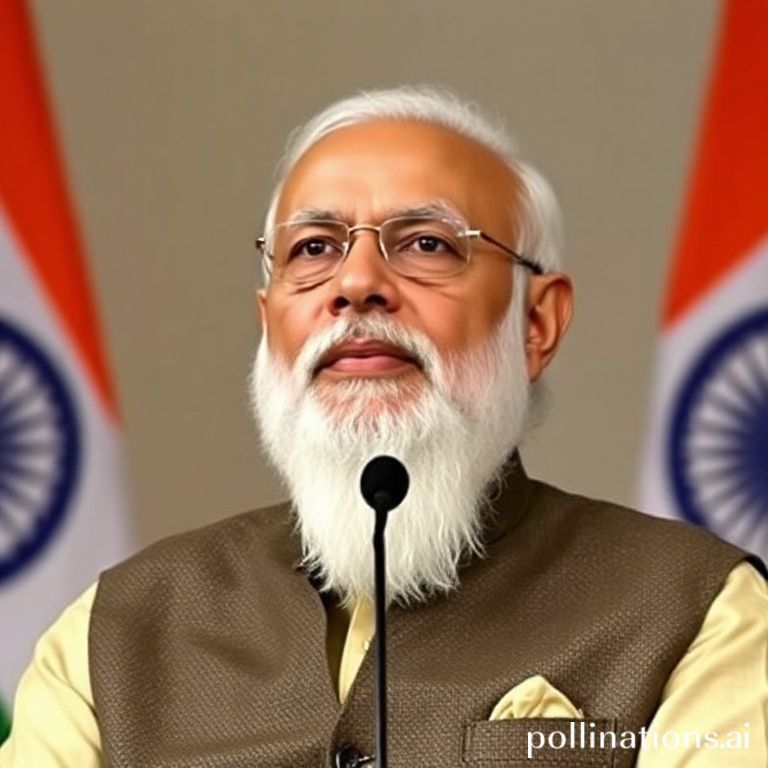
Prime Minister Narendra Modi delivered a powerful address in the Lok Sabha, directing sharp criticism at the Congress party and its historical leader, Jawaharlal Nehru. His remarks centered on the national song 'Vande Mataram,' a symbol of India's freedom struggle. Modi accused the Congress of compromising the song's significance both during the freedom movement and in the years following India's independence.
Modi's comments came during a heated debate in Parliament, where he emphasized the importance of national symbols in unifying the country. He argued that the Congress party's actions had weakened the song's status and, by extension, the spirit of nationalism it embodies. The Prime Minister's rhetoric was not just a critique of past decisions but also a call to honor the sacrifices made during the independence struggle.
Historical Context
The song 'Vande Mataram' was composed by Bankim Chandra Chatterjee in the late 19th century and became an anthem for the Indian independence movement. It inspired countless freedom fighters and remains a significant part of India's cultural heritage. Modi's assertion that Nehru's Congress "fragmented" the song's legacy points to a broader narrative about the political decisions made during the formative years of the nation.
Modi highlighted that Nehru's government faced opposition from various quarters regarding the song. He claimed that the Congress party, in an attempt to appease certain groups, chose to downplay the song's importance. This, according to Modi, was a grave error that contributed to the fragmentation of national unity. He stated that such compromises ultimately led to the partition of India, a painful chapter in the nation's history.
The Prime Minister's remarks were not merely historical but also served as a critique of the Congress party's current stance. He implied that the party continues to prioritize political expediency over national integrity. By invoking the past, Modi aimed to rally support for a more unified vision of India, one that embraces its cultural symbols without reservation.
Political Implications
Modi's speech was strategically timed, as the Congress party faces challenges in various states ahead of upcoming elections. The Prime Minister's focus on national pride and historical grievances seeks to resonate with voters who value a strong sense of identity. By framing the Congress as a party that has historically compromised on national issues, Modi aims to solidify his party's position as the true guardian of India's heritage.
The reference to the "Muslim League" in Modi's speech was particularly pointed. He accused Nehru of yielding to pressures from this political entity, which played a significant role in the partition. This assertion is likely to evoke strong reactions from both supporters and critics of the Congress party. Modi's strategy appears to be to draw a direct line between historical decisions and contemporary political dynamics.
Congress's Response
In response to Modi's allegations, Congress leaders have defended Nehru's legacy. They argue that the first Prime Minister of India made decisions in a complex political landscape. The Congress party maintains that Nehru's vision was to create a secular and inclusive India, which sometimes required difficult compromises. They assert that the narrative Modi presents oversimplifies a multifaceted historical context.
Congress spokespersons have also pointed out that the party has consistently upheld the values of unity and diversity. They argue that Modi's attacks are an attempt to divert attention from pressing issues facing the country today, such as economic challenges and social unrest. The Congress party aims to position itself as a champion of democratic values, contrasting with Modi's more nationalistic approach.
Public Reaction
The public's response to Modi's speech has been mixed. Supporters of the Prime Minister have praised his commitment to national pride and his willingness to confront historical injustices. They view his remarks as a necessary reminder of the sacrifices made during the freedom struggle. For them, Modi's emphasis on 'Vande Mataram' resonates deeply, reinforcing their sense of identity.
Conversely, critics argue that Modi's rhetoric is divisive. They contend that invoking historical grievances can exacerbate existing tensions within society. Some citizens express concern that such political strategies may undermine the inclusive ethos that India has strived to uphold since independence. The debate surrounding Modi's comments reflects broader societal divisions regarding nationalism and identity.
The Role of National Symbols
National symbols like 'Vande Mataram' play a crucial role in shaping collective identity. Modi's insistence on their importance underscores a desire for a unified national narrative. He believes that embracing these symbols can foster a stronger sense of belonging among citizens. This perspective aligns with his broader vision of a resurgent India, one that draws strength from its historical roots.
However, the challenge lies in balancing national pride with inclusivity. Critics argue that a singular focus on certain symbols can alienate minority communities. They advocate for a more pluralistic approach that recognizes the diverse tapestry of Indian identity. The ongoing discourse around 'Vande Mataram' exemplifies this tension between unity and diversity.
Looking Ahead
As the political landscape evolves, the implications of Modi's speech will likely continue to unfold. The Congress party's response and the public's reaction will shape the narrative in the lead-up to elections. Modi's focus on historical grievances may resonate with some voters, while others may seek a more inclusive vision for the future.
The debate over 'Vande Mataram' and its place in contemporary India reflects deeper questions about national identity and unity. As political leaders navigate these complex issues, the challenge remains to foster a sense of belonging that honors the past while embracing the future.
Source:

