McMahon Says Shutdown Reveals Education Department Isn’t Needed: W
News THE ECONOMIC TIMES, livelaw.in, LAW, LAWYERS NEAR ME, LAWYERS NEAR BY ME, LIVE LAW, THE TIMES OF INDIA, HINDUSTAN TIMES, the indian express, LIVE LAW .IN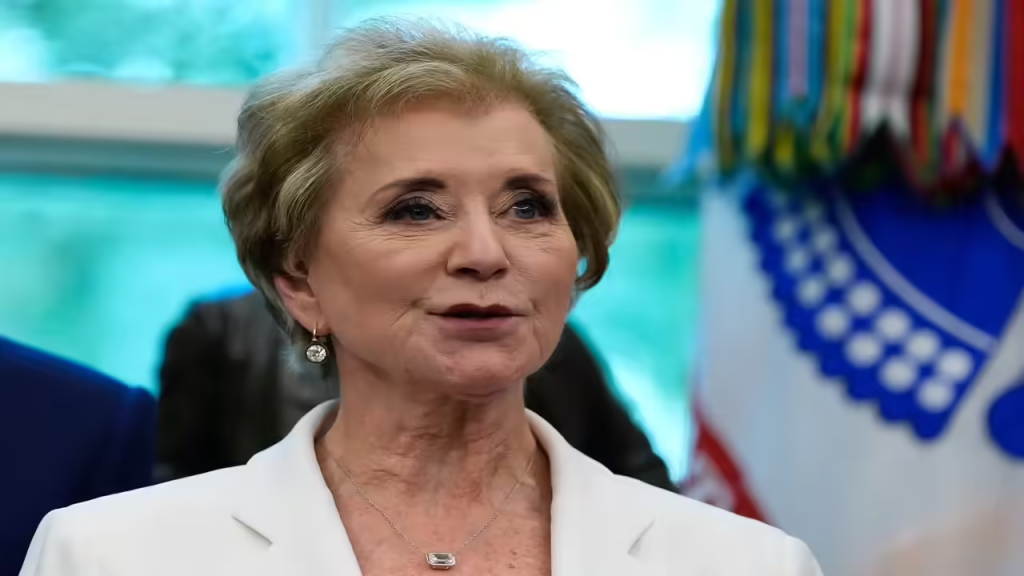
U.S. Education Secretary argues shutdown proved the Department of Education is redundant, sparking debate over federal versus state control in K-12 schooling.
Washington, D.C.- October 17, 2025
Education Secretary Linda McMahon said the ongoing federal shutdown shows the U.S. Department of Education may be unnecessary. She noted that schools nationwide continue to operate despite agency disruptions, reigniting debate over the federal government’s role in education.
McMahon’s Claim: Schools Operating Despite Shutdown
McMahon noted that parts of the Department are on hold and many staff have been laid off. Yet, teachers are still being paid and students are in class.
She said schools continue to run smoothly, showing they don’t rely on constant federal involvement.
She framed this as confirming a long-held view by the administration: that the federal Department is “unnecessary,” and that responsibility for education should be returned to state and local authorities.
McMahon also insisted that no education funding has been impacted by the recent reductions, especially programs like special education that are often viewed as federally supported.
The Counterargument: Federal Role Beyond in-Class Services
Critics and education advocates argue McMahon’s interpretation overlooks key functions the Department performs — many of which are not directly visible to students or classroom instruction day to day.
Funding and Oversight
One major concern is the flow of federal grants and subsidies, especially in underfunded districts. The Department oversees disbursement of billions in federal education funds, ensuring compliance with requirements tied to Title I, Individuals with Disabilities Education Act (IDEA), and other programs. With staffing cuts already affecting internal grant-management units, questions arise about how oversight and compliance work will continue.
Without federal monitoring, states may struggle to ensure equitable access to those funds. One Department insider, speaking to NPR, warned that staff reductions in offices administering grants could lead to oversight gaps.
Civil Rights and Compliance
Another vital role is enforcement of civil rights protections in education — including protections against discrimination, ensuring accessibility for students with disabilities, and safeguarding equal opportunity. The Department’s Office for Civil Rights (OCR) has long been critical in these areas. With layoffs hitting the OCR, its capacity may be impaired.
Some regions may lack effective mechanisms to handle such enforcement at state or local levels, raising fears of uneven protections for historically marginalized students.
Data, Research, National Benchmarks
Federal agencies also collect nationwide educational data, research best practices, and maintain comparative benchmarks (such as NAEP, the “Nation’s Report Card”). These help inform national policy, track achievement gaps, and guide improvement efforts across states. If these functions are weakened or dismantled, some analysts worry the collective view of national trends may be lost.
What This Could Mean for Schools
Greater State & Local Burden
If the Department’s roles are withdrawn or diminished, states and local school districts might have to absorb additional responsibilities — often with limited resources or personnel. This could strain administrative departments, especially in smaller or rural districts.
Risk of Inconsistency
One potential consequence is fragmentation: each state or district may pursue divergent standards, compliance rules, and accountability norms, complicating efforts to maintain consistency across the country.
Vulnerable Students at Risk
Programs aimed at supporting low-income, English-learner, or special-needs students could be especially vulnerable. Without federal oversight, the equitable distribution of resources and protections could weaken, disproportionately affecting disadvantaged communities.
Legal and Political Conflict
This debate may ignite conflicts over constitutional authority, statutory mandates, and funding laws. Dismantling or disabling federal functions would likely face legal challenges — especially over programs codified in law, such as IDEA or Title I.
Broader Political & Policy Context
McMahon’s remarks align with a broader agenda from the current administration to restructure or dismantle the Department of Education, pushing more authority for schooling to states. Indeed, earlier executive orders directed the DOE to wind down operations and transfer certain functions to other agencies.
The challenge: the Department exists by statute — only Congress can abolish it outright. Even attempts to shrink its scope substantially must contend with legal constraints, statutory obligations, and pushback from civil rights, education, and advocacy groups.
As debates heat up, stakeholders from teachers’ associations, civil rights organizations, and state education departments may ramp up pressure to preserve core federal functions.
What to Watch
- Funding disruptions — whether states or districts feel shortfall pressures or compliance issues
- Legal challenges — particularly over whether core functions (e.g. civil rights enforcement) can be eliminated
- State responses — how different states adjust to absorbing greater responsibilities
- Advocacy pressure — from parents, teachers, and education equity groups seeking to protect vulnerable students
- Congressional action — whether new legislation will affirm, limit, or restructure the Department
Excerpt (for snippet)
U.S. Education Secretary Linda McMahon claims the federal shutdown proves the Department of Education is dispensable — a stance drawing sharp pushback over the agency’s crucial roles in funding, civil rights enforcement, and educational oversight.
Source:

