Karnataka Expands Telescope Initiative for Government Schools
NewsKarnataka Expands Telescope Initiative for Government Schools
New program aims to enhance science education across the state
India, December 4, 2025, Thursday, 2025
India, October 10, 2023, Tuesday, 2023
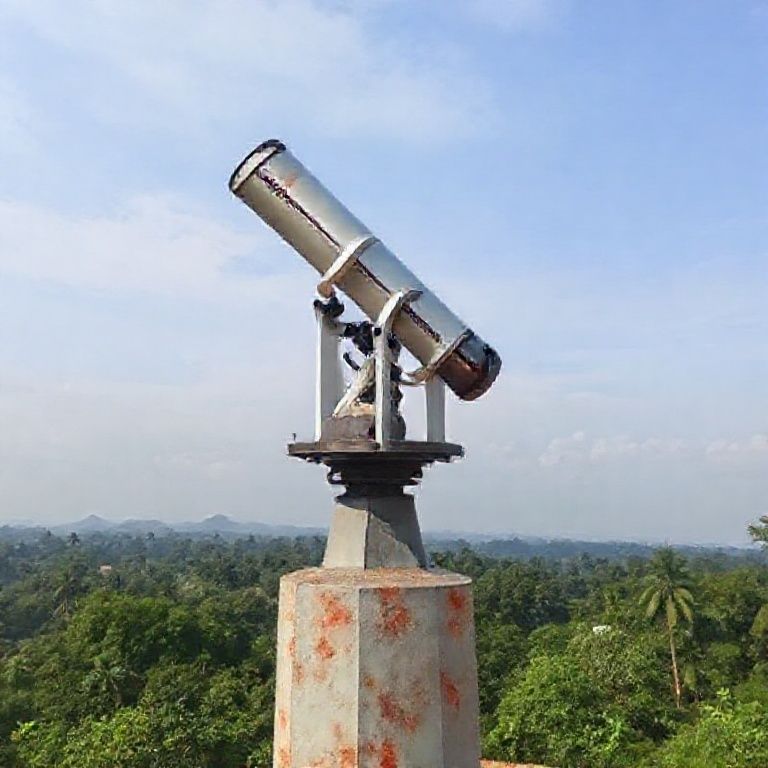
The Karnataka government is set to broaden its telescope initiative, aiming to improve science education in government schools. This program, which has already shown promise in select institutions, will now reach more students across the state. The initiative reflects the government's commitment to enhancing educational resources and fostering a love for science among young learners.
Background of the Initiative
The telescope scheme was first introduced as part of a pilot project in a few government schools. The objective was to provide students with hands-on experience in astronomy and related sciences. By using telescopes, students could observe celestial bodies, sparking their interest in the universe. The initial feedback from students and teachers has been overwhelmingly positive, prompting the government to expand the program.
Benefits of the Telescope Program
The telescope initiative offers numerous benefits. First, it provides practical learning experiences that textbooks alone cannot offer. Students gain a deeper understanding of astronomical concepts through direct observation. This experiential learning approach is crucial in developing critical thinking and analytical skills.
Moreover, the program encourages teamwork and collaboration among students. Working in groups to operate telescopes fosters communication and problem-solving abilities. These skills are essential not only in science but also in various aspects of life.
The initiative also aims to bridge the gap between urban and rural education. Many rural schools lack access to advanced scientific tools. By introducing telescopes in these areas, the government hopes to level the playing field and ensure that all students have equal opportunities to explore science.
Implementation Strategy
The Karnataka government plans a phased rollout of the telescope scheme. Initially, the focus will be on schools that participated in the pilot project. Teachers from these schools will receive training on how to effectively use the telescopes and integrate them into their science curriculum.
Following this, the program will expand to additional government schools across the state. The government will collaborate with educational organizations to provide necessary resources and support. This partnership will ensure that teachers are well-equipped to guide students in their astronomical explorations.
Community Involvement
Community involvement is a crucial aspect of the telescope initiative. The government encourages local communities to participate in the program. Parents and community members can engage with students during observation sessions, fostering a sense of shared learning.
Additionally, local astronomy clubs and organizations may be invited to assist in the program. Their expertise can enhance the educational experience for students. Workshops and public events can also be organized to raise awareness about astronomy and its significance.
Challenges Ahead
While the telescope initiative holds great promise, challenges remain. One significant hurdle is ensuring that all schools have access to the necessary infrastructure. Some schools may lack the space or resources to accommodate telescopes and related equipment.
Training teachers effectively is another challenge. Not all educators may have a background in astronomy or science. The government must ensure that training programs are comprehensive and accessible to all teachers involved in the initiative.
Furthermore, maintaining the telescopes and ensuring their proper use is essential. Regular maintenance checks will be necessary to keep the equipment in good condition. Schools will need support in managing and caring for the telescopes.
Future Prospects
The expansion of the telescope initiative aligns with the government's broader educational goals. By enhancing science education, the government aims to inspire the next generation of scientists and innovators. This initiative could lead to increased interest in STEM (Science, Technology, Engineering, and Mathematics) fields among students.
Moreover, the program may contribute to Karnataka's reputation as a hub for scientific research and education. By investing in the future of its students, the state can cultivate a skilled workforce capable of driving innovation and progress.
In conclusion, the Karnataka government's decision to expand the telescope initiative is a significant step toward improving science education in government schools. By providing students with access to telescopes and hands-on learning experiences, the program aims to inspire curiosity and foster a passion for science. As the initiative rolls out, it will be essential to address the challenges ahead and ensure that all students benefit from this exciting opportunity.
Source:

