India Set to Commission Third Nuclear Submarine with Ballistic Mis
NewsIndia Set to Commission Third Nuclear Submarine with Ballistic Missiles
Navy Chief Announces Significant Milestone in Naval Capabilities
India, December 2, 2025, Tuesday, 2025
India, October 10, 2023, Tuesday, 2023
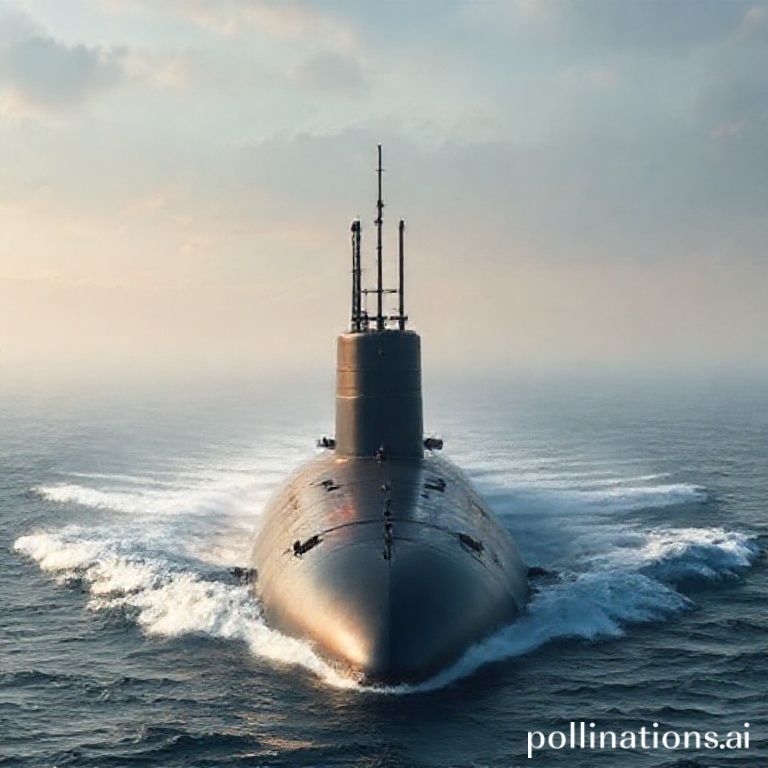
India is on the verge of commissioning its third nuclear submarine equipped with ballistic missiles. This announcement comes from the Chief of the Naval Staff, Admiral R. Hari Kumar. The submarine, part of India's strategic deterrent force, represents a significant advancement in the nation's naval capabilities.
The new submarine, named INS Vishal, is expected to enhance India's maritime security. It will join the existing fleet of nuclear submarines, which includes INS Arihant and INS Arighat. These vessels play a crucial role in India's defense strategy, particularly in the context of regional security dynamics.
Strategic Importance of Nuclear Submarines
Nuclear submarines are vital for maintaining a credible second-strike capability. They allow a nation to deter potential adversaries by ensuring that any attack would be met with a devastating response. The ability to launch ballistic missiles from underwater adds a layer of stealth and surprise.
Admiral Kumar emphasized that the commissioning of INS Vishal will bolster India's strategic deterrence. It will also enhance the Indian Navy's ability to operate in the Indian Ocean Region (IOR). This region is increasingly becoming a focal point for geopolitical tensions, particularly with the growing presence of China.
Technological Advancements
INS Vishal incorporates advanced technologies that improve its stealth and operational capabilities. The submarine features a new generation of sonar systems and weaponry. These enhancements will allow it to operate effectively in contested environments.
The Indian Navy has invested significantly in indigenous defense production. The development of INS Vishal is a testament to this commitment. The submarine was constructed at the Ship Building Centre in Visakhapatnam. This facility has become a hub for India's naval shipbuilding efforts.
Training and Readiness
The commissioning of INS Vishal is not just about the vessel itself. It also involves extensive training for the crew. The Indian Navy has been conducting rigorous training exercises to ensure that personnel are fully prepared to operate the submarine.
Admiral Kumar noted that the crew has undergone specialized training programs. These programs focus on operating the submarine's advanced systems and weapons. The Navy aims to ensure that the crew can respond effectively to any operational scenario.
Regional Security Context
The commissioning of INS Vishal comes at a time of heightened tensions in the Indo-Pacific region. China's naval expansion has raised concerns among neighboring countries. The Indian Navy's enhanced capabilities will serve as a counterbalance to this growing influence.
India's strategic partnerships with countries like the United States, Japan, and Australia further strengthen its position in the region. These alliances facilitate joint exercises and information sharing, enhancing collective security.
Future Prospects
Looking ahead, the Indian Navy plans to expand its fleet of nuclear submarines. The goal is to achieve a more robust deterrent posture. This expansion aligns with India's broader defense strategy, which emphasizes self-reliance and indigenous production.
The Navy is also exploring the development of additional submarines. These future vessels will likely incorporate even more advanced technologies. The focus will be on enhancing stealth, speed, and operational flexibility.
Public Perception and Support
The commissioning of INS Vishal has garnered significant attention from the public and defense analysts. Many view it as a crucial step in strengthening India's defense capabilities. The submarine's launch has been celebrated as a milestone in the nation's journey toward self-reliance in defense.
Government officials have expressed strong support for the project. They highlight the importance of investing in indigenous defense capabilities. This investment not only enhances national security but also boosts the economy by creating jobs in the defense sector.
International Reactions
The announcement of INS Vishal's commissioning has drawn reactions from various international observers. Some analysts view it as a sign of India's growing assertiveness in regional security matters. Others express concern about the potential for an arms race in the Indo-Pacific.
India's commitment to maintaining peace and stability in the region remains a key message. The Navy's enhanced capabilities are intended to deter aggression while promoting a rules-based order in the Indo-Pacific.
Conclusion
As India prepares to commission its third nuclear submarine, the implications for regional security are significant. The advancements in naval capabilities reflect India's commitment to safeguarding its interests. The commissioning of INS Vishal marks a pivotal moment in the evolution of the Indian Navy.
Source:

