Deonar dumping ground health risks.
News THE TIMES OF INDIA, daijiworld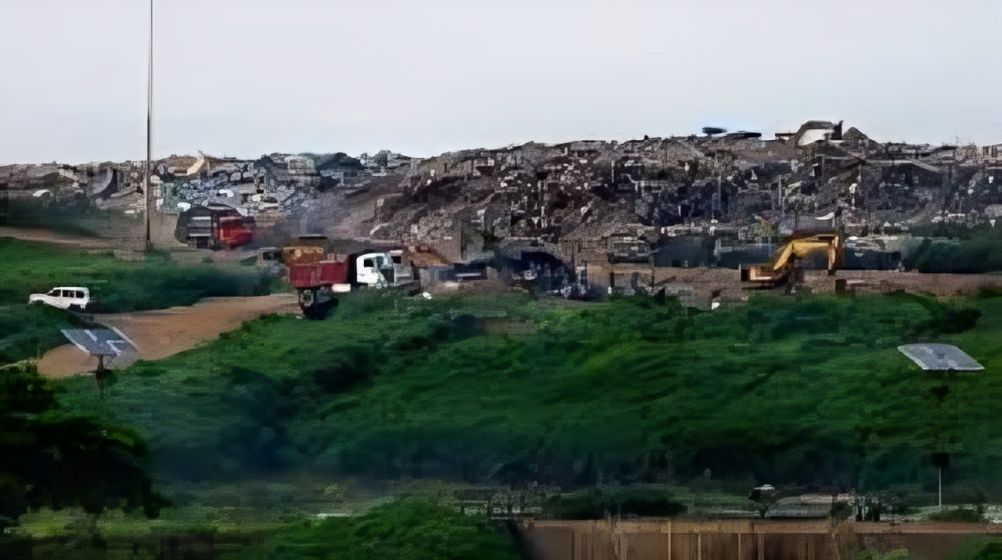
A petition has been filed in the Bombay High Court by the Al Abbas Charitable Foundation seeking a stay on the construction of a 3,000 metric tonne per day waste-to-energy (WtE) incineration plant at Mumbai’s Deonar dumping ground. The plea also challenges the relocation of Dharavi residents to the same area, citing severe environmental and public health concerns.
The petition highlights the area’s history of fires, toxic emissions, and mismanaged waste, which have contributed to high instances of chronic diseases among the local population. It criticizes the state government’s decision to allocate 124 acres of the Deonar landfill for relocating residents from the Dharavi redevelopment project, arguing it exposes more people to hazardous conditions.
Local residents, particularly from Govandi, have expressed strong opposition to the WtE plant, alleging violations of their fundamental rights under Articles 14 and 21 of the Constitution. They argue that the project adds more pollution and danger without providing benefits like jobs or electricity to the community. Critics also point out that Deonar’s unsegregated waste, consisting of organic, plastic, biomedical, and construction debris, is unfit for incineration.
The petition demands that the WtE facility be set up in a non-residential zone after thorough environmental assessment and public consultation. It also calls for a committee of independent experts to evaluate the project’s long-term impacts. The plea underscores Supreme Court rulings that question the viability of incineration-based waste systems in Indian urban settings, emphasizing the need to protect public health and constitutional rights.
This legal challenge comes amid broader concerns about the Deonar landfill, which has been operational since 1927 and is undergoing multiple waste management projects to address its massive legacy waste problem. The Brihanmumbai Municipal Corporation (BMC) has floated a ₹2,368 crore tender for the bioremediation and disposal of 185 lakh tons of legacy waste at the site.
As the High Court reviews the petition, the outcome could have significant implications for Mumbai’s waste management strategies and urban redevelopment plans.
Sources
