Powerful 6.3‐Magnitude Earthquake Strikes Northern Afghanistan, ki
News THE ECONOMIC TIMES, livelaw.in, LAW, LAWYERS NEAR ME, LAWYERS NEAR BY ME, LIVE LAW, THE TIMES OF INDIA, HINDUSTAN TIMES, the indian express, LIVE LAW .IN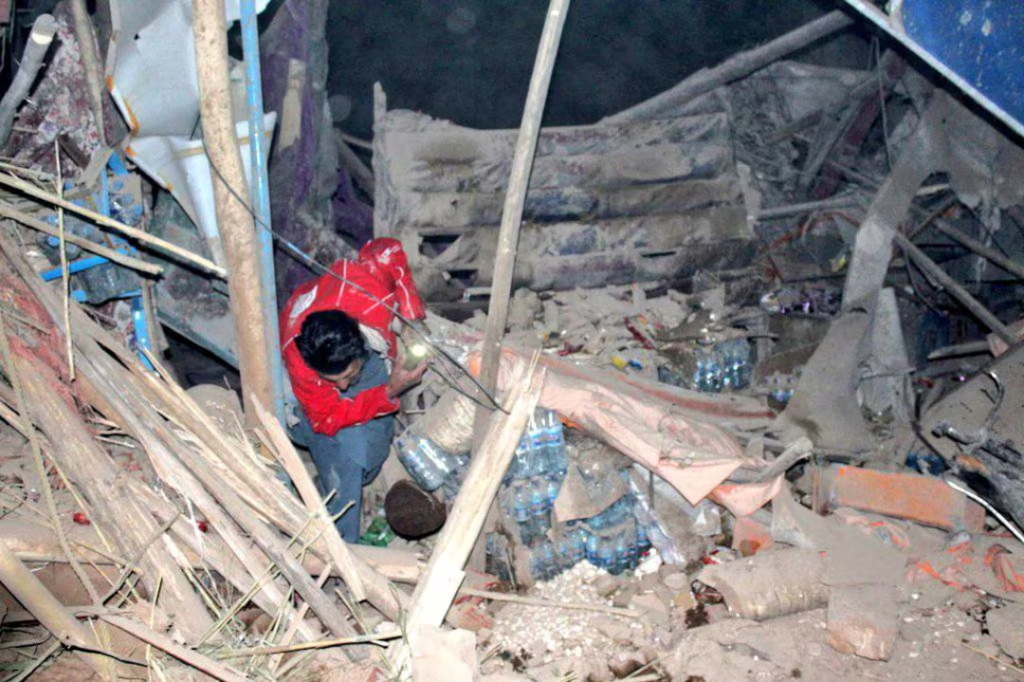
Early‐morning tremor near Mazar-i-Sharif and Khulm rocks Balkh and Samangan provinces; hundreds injured as rescue efforts begin
Afghanistan | November 3, 2025
A strong earthquake with a magnitude of approximately 6.3 struck northern Afghanistan just after midnight local time, with its epicentre located near the towns of Khulm (also spelled Kholm) and Mazar‑i‑Sharif in Balkh Province and neighbouring Samangan Province. Officials say at least 20 people are dead and roughly 320 injured, as damage is reported across multiple districts and rescue teams rush to reach remote communities.
The quake and its immediate impact
The seismic event struck at approximately 00:59 AFT (local time) on November 3 (20:29 UTC on November 2) at a shallow depth of around 28 km, making the shaking particularly intense for the region.Reports indicate the town of Khulm and the city of Mazar-i-Sharif felt very strong shaking, with communities in surrounding areas suffering structural damage. The historic Blue Mosque in Mazar-i-Sharif — a significant cultural and religious site — sustained damage to masonry and tiling in its courtyard, though the main structure remained standing.
Power outages have been reported across the region, including in Kabul, as electricity infrastructure was disrupted by the tremor. Roads and transport links have been impacted, and in some hilly zones landslides and falling debris have blocked key routes.
Human toll & rescue efforts
Official counts indicate at least 20 fatalities and approximately 320 injured; however, authorities caution that the toll may rise as search and rescue teams access more remote villages. Many of the injured have been treated at hospitals in Mazar-i-Sharif and other cities, while emergency response units from the government’s defence, health and disaster-management agencies have been mobilised.
In affected districts of Balkh and Samangan provinces, collapsed homes, damaged walls and shock-injured residents are being reported. Rescuers are working through darkness and early-morning hours to retrieve people trapped under rubble and provide medical aid. Communities remain in fear of aftershocks, and many are gathering in open spaces or temporary shelters.
Why Afghanistan remains at high seismic risk
Experts say that Afghanistan sits in a seismically active zone due to its location near the boundary between the Eurasian Plate and the north-moving Indian Plate. The country has a history of destructive earthquakes and, according to one recent analysis, has experienced over 350 earthquakes of magnitude 5.0 or greater since 1990. In particular, the mountainous terrain, weakly constructed buildings and limited emergency-infrastructure in many rural regions amplify the damage when quakes strike.
Infrastructure and access challenges
In northern Afghanistan, many buildings remain poorly reinforced, and the combination of shallow depth of the quake and local geology has amplified the ground shaking. The damage to roads and the risk of landslides complicate relief operations. One route connecting Khulm and Mazar-i-Sharif was reported blocked by a slide shortly after the tremor.
In remote rural districts, rescue teams are facing difficulties reaching impacted villages, and many injured may be waiting for hours before transport and medical attention are available. Emergency supplies and field medical units have been deployed, but the challenge is significant given the terrain, weather, and accessibility.
Wider implications & aid concerns
This latest quake adds to a pattern of natural-disaster shocks facing Afghanistan, which is already dealing with humanitarian stress, international aid constraints, and infrastructure fragility. Some analysts warn that due to limited building standards and the potential for rising casualties, the country remains highly vulnerable to future seismic events.
International humanitarian organisations are preparing to assist, but coordination is complicated by security, governance and logistical factors. The speed and scale of the response will influence how many lives are saved and how long recovery takes.
What’s next?
In the hours and days ahead, authorities will focus on:
- Searching for survivors in collapsed structures and remote hamlets.
- Transporting the injured to functioning medical centres, and establishing field-hospitals where needed.
- Assessing structural safety of damaged buildings, temples and critical infrastructure.
- Clearing roads and restoring power and communications for affected zones.
- Sheltering displaced families, especially where homes are unsafe to return to.
- Mobilising national and international aid to sustain operations beyond the initial emergency phase.
Afghanistan’s seismic vulnerability means that preparedness, resilient infrastructure and rapid response are critical. The country’s past experience with earthquakes — including major events in 2025 and previous years — underlines the urgency of strengthening disaster-risk management.
As rescue operations continue, the full scope of the damage, casualty figures and longer-term recovery needs will become clearer. But for now, northern Afghanistan is reeling from the force of a sudden, powerful shake — a stark reminder of the ongoing risks faced by a nation in a fragile environment.
Source:

