J&K an Exception, No Delimitation Before 2026 Census: Supreme Court
News THE ECONOMIC TIMES, livelaw.in, LAW, LAWYERS NEAR ME, LAWYERS NEAR BY ME, LIVE LAW, THE TIMES OF INDIA, HINDUSTAN TIMES, the indian express, LIVE LAW .INSC clarifies constitutional position on delimitation; bars exercise in states before updated census data, but allows J&K exception.
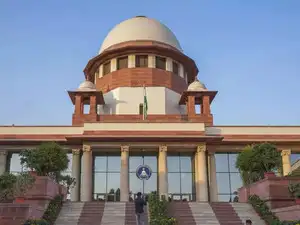
New Delhi July 26, 2025 : In a crucial ruling with significant political and constitutional impact, the Supreme Court of India issued a key declaration on Friday. It stated that states can begin delimitation exercises only after publishing data from the first census conducted after 2026. However, the court upheld the exercise carried out in the Union Territory of Jammu and Kashmir. It described the move as an “exception” and confirmed it as constitutionally valid.
The decision was delivered by a bench of Justices Surya Kant and Justice N.K. Singh examined a petition that challenged the Centre’s move to redraw electoral boundaries in Jammu and Kashmir, while choosing not to do so in states like Andhra Pradesh and Telangana. The petition argued that this selective implementation of delimitation violated the constitutional principle of equality and undermined democratic norms.
Justice Kant wrote the judgment and offered key clarification. He explained that Article 170(3) of the Constitution bars delimitation in states based on outdated census data. The provision states that states can redraw electoral boundaries only after the results of the first census conducted after 2026 are published.
The court emphasized that the constitutional restriction applies strictly to states, not Union Territories. Therefore, the government’s decision to proceed with delimitation in Jammu and Kashmir a Union Territory since the revocation of Article 370 in 2019 did not violate any constitutional provisions. The bench dismissed the plea seeking similar delimitation exercises in other states, noting that the Centre’s actions were legally justified.
“Delimitation process is, by design, a legislative and executive function,” the court observed. “If the Supreme Court were to compel delimitation in a specific state through judicial fiat, it would interfere with the executive’s policy-making role,” the court stated. The judgment also highlighted the delicate institutional balance within the Indian Constitution. It warned against judicial overreach into areas that are the responsibility of the executive. It reiterated that maintaining equilibrium among institutional roles is essential for preserving the legitimacy and functionality of the democratic process.
The Centre had earlier defended its decision, citing administrative necessity and political reorganization. This followed the bifurcation of the former state of Jammu and Kashmir. In 2022, the Delimitation Commission submitted its report. It increased the number of assembly constituencies and redrew electoral boundaries in the region. The Supreme Court’s verdict removes legal ambiguity around the Centre’s move. It also reinforces that electoral reforms must follow constitutional provisions. Additionally, it sets a clear timeline for future delimitation in states, restricting such exercises until updated census data is available after 2026.
As India prepares for its next census, the ruling strengthens the legal framework for electoral restructuring. It also affirms Jammu and Kashmir’s unique administrative status under the current constitutional setup.
Source


