Delimitation Bill Empowers EC to Act in Pak-Occupied J&K
NewsDelimitation Bill Empowers EC to Act in Pak-Occupied J&K
New legislation allows Election Commission to oversee changes in Pakistan-occupied Jammu and Kashmir boundaries.
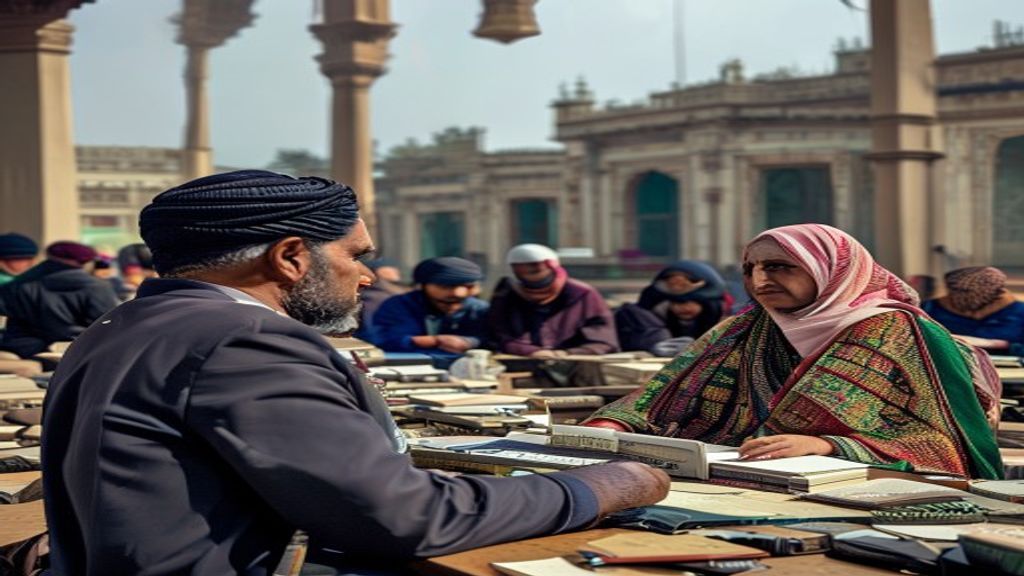
The recently introduced Delimitation Bill in India grants the Election Commission (EC) the authority to conduct delimitation exercises in Pakistan-occupied Jammu and Kashmir (J&K). This significant move aims to address the political representation in the region, which has long been a point of contention. The bill was presented in Parliament on October 15, 2023, and is expected to reshape the electoral landscape in J&K.
Understanding the Delimitation Bill
The Delimitation Bill is a legislative measure that outlines the process of redrawing electoral boundaries. This bill specifically empowers the Election Commission to undertake delimitation in areas currently under Pakistan's control. By doing so, it seeks to ensure fair representation for the residents of J&K, who have historically faced challenges in political participation.
Furthermore, the bill aims to clarify the jurisdiction of the EC in relation to delimitation in disputed territories. This is crucial as it sets a precedent for how electoral processes can be managed in regions with complex political histories. The implications of this bill extend beyond mere boundary changes; they touch on issues of governance, representation, and national integrity.
The Political Context of the Bill
The introduction of the Delimitation Bill comes at a time of heightened political activity in J&K. The region has witnessed significant changes since the abrogation of Article 370 in August 2019, which revoked its special status. As a result, the political landscape has evolved, necessitating a reassessment of electoral boundaries to reflect the current demographics.
Moreover, the bill is seen as a strategic move by the Indian government to assert its claim over the entire region of Jammu and Kashmir. By including Pakistan-occupied areas in the delimitation process, the government aims to reinforce its stance on territorial integrity. This could potentially lead to increased political engagement from residents in these areas, fostering a sense of inclusion in the democratic process.
Implications for the Election Commission
The Delimitation Bill places significant responsibilities on the Election Commission. With the authority to conduct delimitation in Pakistan-occupied J&K, the EC must navigate complex political and logistical challenges. This includes gathering accurate demographic data and ensuring that the delimitation process is transparent and fair.
In addition, the EC will need to engage with various stakeholders, including local communities and political parties, to ensure that the process is inclusive. This engagement is vital for building trust and legitimacy in the electoral process, especially in a region with a history of political unrest.
Reactions to the Delimitation Bill
The introduction of the Delimitation Bill has sparked varied reactions from political parties and civil society groups. Supporters argue that it is a necessary step towards ensuring fair representation for all residents of J&K. They believe that the bill will empower local populations and enhance democratic participation.
Conversely, critics express concerns about the potential for political manipulation. They fear that the delimitation process could be used to favor certain political parties or communities over others. This apprehension highlights the need for the EC to conduct the delimitation exercise with utmost impartiality and transparency.
Future Prospects for Jammu and Kashmir
As the Delimitation Bill progresses through Parliament, its potential impact on the future of Jammu and Kashmir remains a topic of intense discussion. If enacted, the bill could lead to significant changes in the political dynamics of the region. This includes the possibility of increased political representation for marginalized communities.
Moreover, the bill may pave the way for future legislative measures aimed at addressing the unique challenges faced by J&K. By focusing on fair representation and inclusive governance, the Indian government could foster a more stable and democratic environment in the region.
Conclusion of Legislative Process
The legislative process for the Delimitation Bill is expected to unfold over the coming months. As discussions continue in Parliament, stakeholders will closely monitor the developments. The outcome of this bill could have lasting implications for the political landscape of Jammu and Kashmir, particularly in relation to Pakistan-occupied territories.
In summary, the Delimitation Bill represents a pivotal moment in the ongoing discourse surrounding Jammu and Kashmir. By empowering the Election Commission to conduct delimitation in Pakistan-occupied areas, the bill aims to enhance political representation and strengthen democratic processes in the region.
Source: