Amit Shah Rejects Alliance with Humayun Kabir’s Party in Bengal
NewsAmit Shah Rejects Alliance with Humayun Kabir's Party in Bengal
BJP Leader Criticizes Mamata Banerjee's Political Tactics
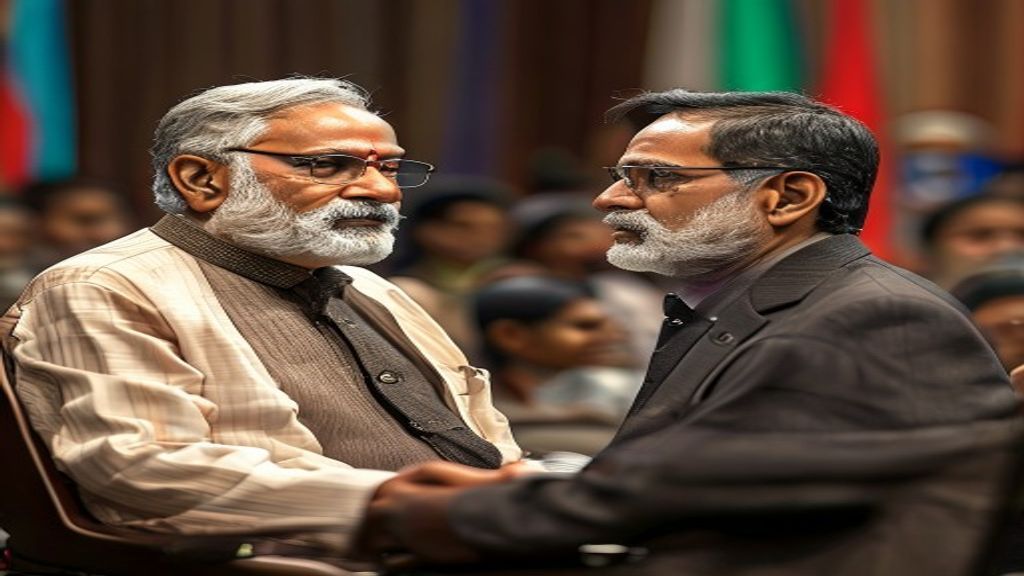
In a recent press conference, Amit Shah, the Union Home Minister and senior leader of the Bharatiya Janata Party (BJP), firmly rejected the possibility of an alliance with Humayun Kabir's party in West Bengal. This statement came during the unveiling of the BJP's manifesto for the upcoming Bengal elections. Shah's remarks highlighted the stark political divide between the BJP and the ruling Trinamool Congress (TMC), led by Chief Minister Mamata Banerjee.
Shah accused the TMC of engaging in what he termed "manufacturing political conspiracies." He emphasized that the party's tactics are not only deceptive but also detrimental to the political landscape of West Bengal. "You do not know Mamata Banerjee's capabilities. She can make 2,000 such videos," Shah stated, referring to the alleged misinformation campaigns that he claims the TMC employs to mislead voters.
The BJP leader drew a clear line between his party and Kabir's faction, stating, "Humayun Kabir and the BJP are like the North Pole and the South Pole. We can never be together." This metaphor underscored the ideological differences that Shah believes are insurmountable. He reiterated that the BJP stands for a different vision for West Bengal, one that contrasts sharply with the TMC's approach.
Shah's comments reflect a broader strategy by the BJP to consolidate its position in West Bengal, a state that has historically been dominated by the TMC. The BJP has been making significant inroads in the region, particularly in the wake of the 2019 Lok Sabha elections, where the party secured a substantial number of seats. This momentum has led the BJP to intensify its campaign efforts in the state, aiming to unseat the TMC in the upcoming assembly elections.
During the press conference, Shah also addressed the BJP's manifesto, which outlines the party's vision and promises for the people of West Bengal. He emphasized key issues such as development, governance, and security. The manifesto aims to resonate with voters who are seeking change after years of TMC rule. Shah believes that the BJP's focus on these issues will attract support from a diverse range of constituents.
The BJP's campaign strategy in West Bengal includes a robust outreach program. Shah mentioned that the party plans to engage with voters directly, addressing their concerns and aspirations. This grassroots approach is designed to build a strong connection with the electorate, contrasting with what Shah describes as the TMC's top-down governance style.
In addition to criticizing the TMC, Shah also highlighted the BJP's achievements in other states. He pointed to successful governance models in states where the BJP is in power, suggesting that similar outcomes could be replicated in West Bengal. This comparison aims to instill confidence in voters that a BJP-led government would prioritize their needs and deliver tangible results.
Shah's remarks come at a time when political tensions in West Bengal are high. The TMC has been vocal in its opposition to the BJP, accusing it of trying to undermine the state's political stability. In response, Shah has urged voters to recognize the TMC's alleged failures and to consider the BJP as a viable alternative.
The BJP's campaign in West Bengal is also marked by a focus on cultural identity and nationalism. Shah has emphasized the importance of preserving the state's rich heritage while promoting a sense of unity among its diverse population. This narrative aims to resonate with voters who value both their cultural roots and a strong national identity.
As the election date approaches, the political landscape in West Bengal is becoming increasingly competitive. The TMC is expected to leverage its established presence and grassroots support, while the BJP aims to capitalize on its growing popularity. Shah's statements reflect the BJP's determination to challenge the TMC's dominance and to present itself as the party of change.
In summary, Amit Shah's recent comments underscore the BJP's strategy to position itself as a formidable contender in West Bengal. By rejecting alliances with parties like Humayun Kabir's and criticizing the TMC's political tactics, Shah aims to solidify the BJP's identity and appeal to voters seeking a new direction for the state. The upcoming elections will be a crucial test for both parties as they vie for the support of the electorate in a rapidly evolving political environment.
Source: