Supreme Court Urges Centre to Reconsider Interpretation of Wangchu
NewsSupreme Court Urges Centre to Reconsider Interpretation of Wangchuk’s Speech
Justices emphasize the need for a balanced view on public discourse
India, February 12, 2026, Thursday, 2026
India, October 10, 2023, Tuesday, 2023
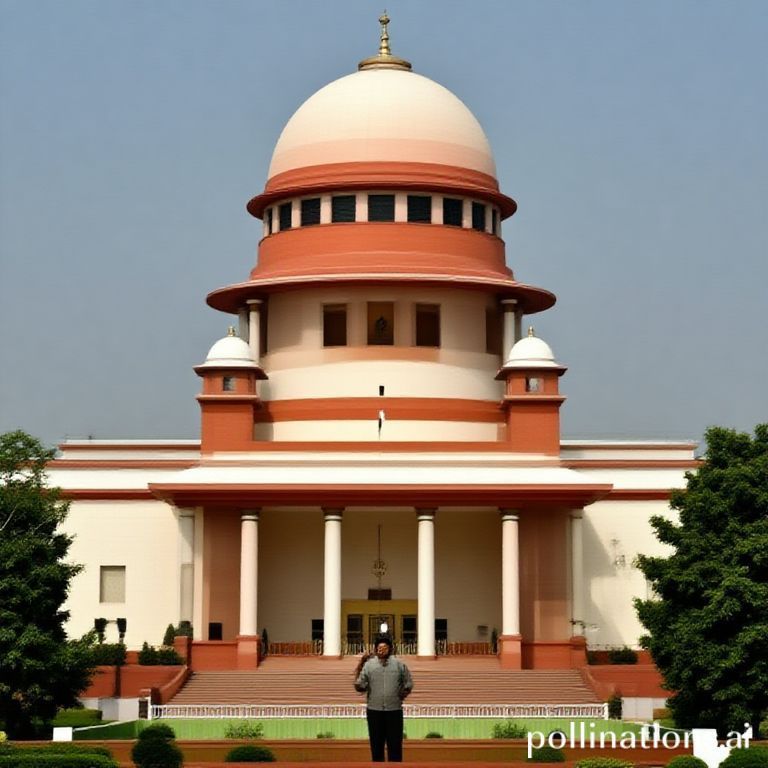
The Supreme Court of India recently addressed the Centre's interpretation of a speech made by prominent activist Sonam Wangchuk. The court's remarks came during a hearing that scrutinized the government's response to Wangchuk's statements regarding environmental issues and regional autonomy. The justices urged the government to adopt a more nuanced understanding of public discourse, particularly when it involves sensitive topics.
Background of the Case
Sonam Wangchuk, known for his advocacy on climate change and sustainable development, delivered a speech that sparked significant debate. His comments touched on the challenges faced by the Himalayan region, including environmental degradation and the need for greater local governance. The Centre's reaction to Wangchuk's speech raised concerns about freedom of expression and the potential for overreach in interpreting public statements.
The Supreme Court's Intervention
During the proceedings, the justices expressed their concern over the Centre's approach. They emphasized that public figures often speak on complex issues that require careful consideration. The court highlighted the importance of allowing diverse viewpoints to flourish in a democratic society. The justices reminded the government that misinterpretation of speeches could lead to unnecessary tensions and stifle constructive dialogue.
Justice A.M. Khanwilkar, one of the presiding judges, stated that the government should not rush to conclusions based on a single statement. He pointed out that Wangchuk's speech aimed to raise awareness about pressing environmental concerns. The court urged the Centre to engage in a more thoughtful analysis of such public addresses, rather than viewing them through a lens of suspicion.
Freedom of Expression at Stake
The Supreme Court's remarks underscore a broader issue regarding freedom of expression in India. Activists and public figures often face scrutiny for their statements, especially when they challenge government policies. The court's intervention serves as a reminder of the delicate balance between maintaining public order and protecting individual rights.
Legal experts have noted that the judiciary plays a crucial role in safeguarding these rights. The Supreme Court's stance on Wangchuk's speech reinforces the idea that citizens must be free to express their opinions without fear of retribution. This principle is foundational to a healthy democracy and encourages open discussions on critical issues.
Wangchuk's Advocacy
Sonam Wangchuk has been a vocal advocate for sustainable practices in the Himalayan region. His work focuses on promoting eco-friendly technologies and preserving local cultures. Wangchuk's speeches often highlight the intersection of environmental sustainability and social justice. He argues that local communities should have a greater say in decisions that affect their lives and environment.
In his recent speech, Wangchuk called for urgent action to combat climate change. He emphasized the need for innovative solutions that respect traditional knowledge and practices. His comments resonated with many who share concerns about the future of the Himalayas amid rapid development and climate challenges.
Government's Response
The Centre's reaction to Wangchuk's speech has drawn criticism from various quarters. Some observers argue that the government is overly sensitive to dissenting voices. They contend that such reactions can create a chilling effect on free speech, discouraging individuals from speaking out on important issues.
The government's position appears to be rooted in a desire to maintain stability and order. However, critics argue that this approach risks undermining democratic values. They assert that open dialogue is essential for addressing the complex challenges facing the nation, particularly in regions like the Himalayas.
Public Reaction
The Supreme Court's comments have sparked discussions among the public and civil society organizations. Many individuals have expressed support for Wangchuk and his advocacy. Social media platforms have become a battleground for opinions on the matter, with users sharing their thoughts on freedom of expression and the role of activists in society.
Supporters of Wangchuk argue that his speech is a vital contribution to the ongoing conversation about environmental issues. They believe that his insights can help shape policies that prioritize sustainability and community involvement. Conversely, some individuals align with the government's perspective, emphasizing the need for caution in public discourse.
The Role of the Judiciary
The Supreme Court's intervention highlights the judiciary's role in upholding constitutional rights. As the guardian of the Constitution, the court has the authority to ensure that individual freedoms are protected. This case serves as a reminder of the importance of judicial oversight in matters related to free speech and government actions.
Legal analysts suggest that the court's remarks may set a precedent for future cases involving freedom of expression. By advocating for a balanced interpretation of public statements, the judiciary reinforces the idea that diverse viewpoints are essential for a thriving democracy.
Looking Ahead
As the case continues to unfold, the implications for freedom of expression in India remain significant. The Supreme Court's emphasis on careful interpretation may encourage the government to adopt a more open approach to public discourse. This shift could foster an environment where citizens feel empowered to voice their opinions without fear of backlash.
The ongoing dialogue surrounding Wangchuk's speech reflects broader societal tensions. As India grapples with pressing environmental challenges, the need for open discussions becomes increasingly critical. Activists like Wangchuk play a vital role in raising awareness and advocating for change.
In summary, the Supreme Court's intervention in the case of Sonam Wangchuk's speech highlights the importance of protecting freedom of expression. The justices' call for a more nuanced understanding of public discourse serves as a reminder of the delicate balance between government authority and individual rights. As the nation navigates complex issues, fostering open dialogue will be essential for progress and understanding.
Source:


