India Successfully Tests K-4 Missile from Nuclear Submarine
NewsIndia Successfully Tests K-4 Missile from Nuclear Submarine
Test strengthens India's nuclear deterrence capabilities
India, December 24, 2025, Wednesday, 2025
India, October 10, 2023, Tuesday, 2023
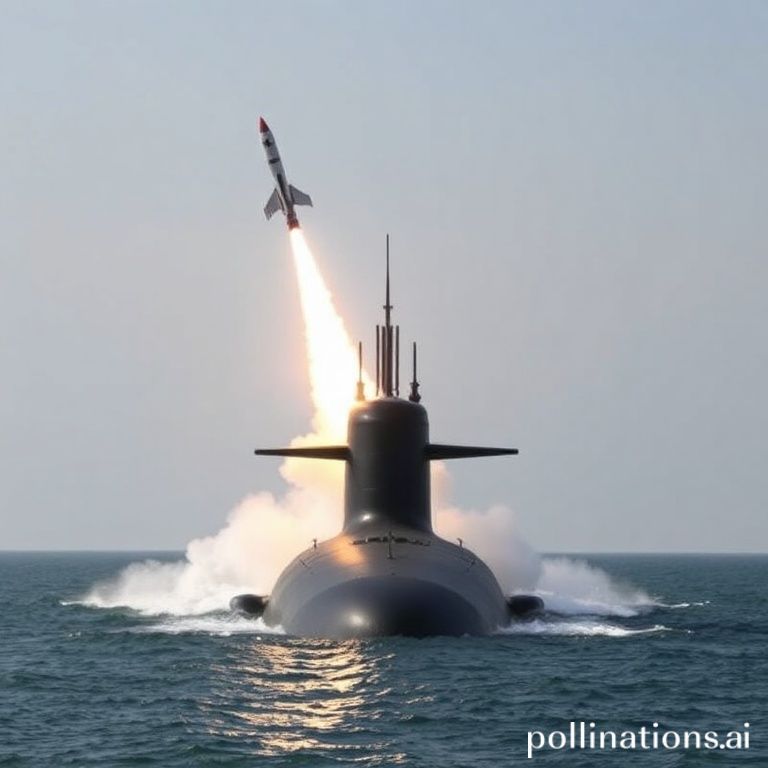
India has successfully conducted a test of its K-4 intermediate-range ballistic missile. The missile was launched from the nuclear-powered submarine INS Arighaat in the Bay of Bengal. This test represents a significant advancement in India's strategic military capabilities.
The K-4 missile is a solid-fuelled weapon. It has a range of 3,500 kilometers and can carry a nuclear payload of up to two tonnes. This capability is essential for bolstering the sea leg of India's nuclear weapons triad. The triad consists of land, air, and sea-based nuclear delivery systems. Each component plays a vital role in ensuring a credible deterrent against potential threats.
The successful test of the K-4 missile demonstrates India's commitment to maintaining a robust defense posture. It also reflects the country's ongoing efforts to modernize its military capabilities. The Indian Navy has been focusing on enhancing its underwater warfare capabilities. The K-4 missile is a crucial part of this strategy.
The INS Arighaat is one of India's advanced submarines. It is equipped with state-of-the-art technology. The submarine's ability to launch the K-4 missile from underwater adds a significant layer of stealth and surprise to India's nuclear arsenal. This capability is particularly important in the context of regional security dynamics.
India's nuclear deterrence strategy aims to prevent conflicts through the credible threat of retaliation. The K-4 missile enhances this strategy by providing a reliable second-strike capability. This means that even if an adversary were to launch a nuclear attack, India would still be able to respond effectively.
The test also underscores India's growing expertise in missile technology. Over the years, India has developed a range of missiles with varying capabilities. The K-4 is part of a broader effort to ensure that India remains a formidable power in the region.
In addition to the K-4, India has also developed other missiles, such as the Agni series. These missiles serve different strategic purposes and enhance India's overall deterrence posture. The successful test of the K-4 missile indicates that India is on track to achieve its defense objectives.
The Indian government has emphasized the importance of self-reliance in defense production. The K-4 missile is a product of indigenous research and development efforts. This focus on self-reliance is crucial for reducing dependence on foreign technology. It also fosters innovation within the country's defense sector.
The test of the K-4 missile comes at a time of heightened tensions in the region. India faces challenges from neighboring countries, particularly in terms of military capabilities. The successful launch of the K-4 missile sends a clear message about India's preparedness to defend its interests.
The Bay of Bengal serves as an ideal testing ground for such missile launches. The vast expanse of water allows for safe testing without endangering civilian populations. The Indian Navy has conducted several tests in this region, demonstrating its commitment to maintaining operational readiness.
International observers are closely monitoring India's missile tests. The country's growing military capabilities raise questions about regional stability. However, India maintains that its defense initiatives are purely for deterrence purposes. The government asserts that it seeks peace and stability in the region.
The K-4 missile test is part of a broader trend of increasing military capabilities among regional powers. Countries in South Asia are investing heavily in modernizing their armed forces. This arms race has implications for regional security and strategic calculations.
India's defense strategy also includes strengthening partnerships with other nations. The country has engaged in defense cooperation with various countries, including the United States and Russia. These partnerships enhance India's technological capabilities and provide access to advanced military systems.
The successful test of the K-4 missile is a testament to India's growing confidence in its defense capabilities. It reflects the country's determination to safeguard its national interests. As India continues to develop its military technology, it is likely to play a more prominent role in regional security dynamics.
The Indian government has reiterated its commitment to maintaining a credible minimum deterrent. This approach aims to ensure that India can respond effectively to any threats. The K-4 missile is a critical component of this strategy, providing India with a reliable and effective means of deterrence.
In summary, the successful test of the K-4 missile from the INS Arighaat marks a significant milestone for India's defense capabilities. It enhances the country's nuclear deterrence strategy and underscores its commitment to maintaining a robust military posture. As India continues to develop its missile technology, it is poised to play a crucial role in shaping the security landscape of the region.
Source:


