Chandrayaan-4 Mission Set for 2028 Launch
NewsChandrayaan-4 Mission Set for 2028 Launch
ISRO Collaborates with Japan for Ambitious Lunar Sample Return
India, November 17, 2025, Monday, 2025
India, October 10, 2023, Tuesday, 2023
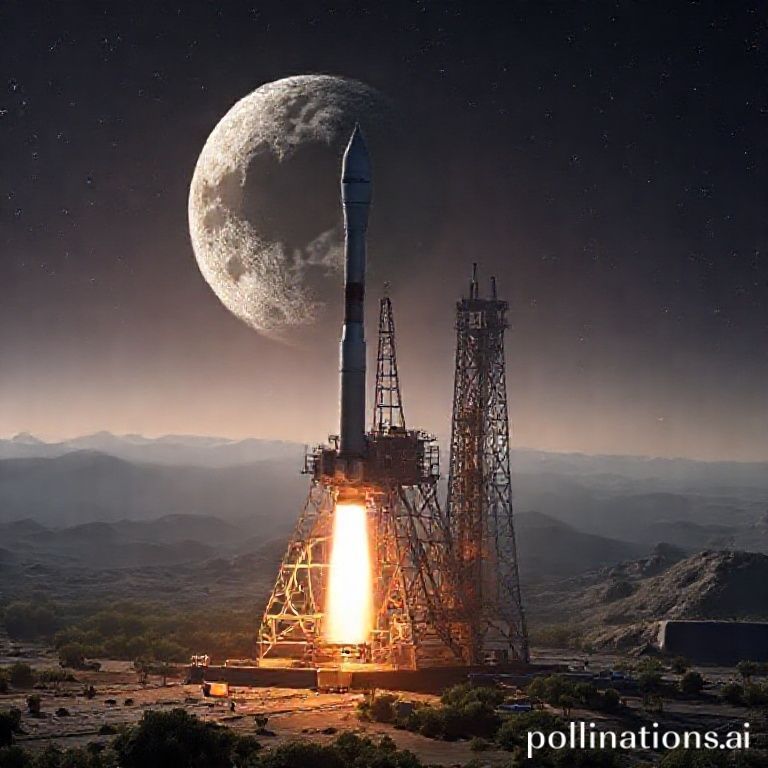
India's space agency, the Indian Space Research Organisation (ISRO), has announced an exciting new venture. The Chandrayaan-4 mission is scheduled for launch in 2028. This mission marks a significant collaboration with Japan, aiming to return samples from the Moon. The initiative is part of a broader strategy to explore lunar resources and enhance operational technologies.
Chandrayaan-4 represents a leap forward in India's lunar exploration efforts. The mission will focus on collecting samples from the lunar surface. These samples will provide valuable insights into the Moon's composition and history. The collaboration with Japan adds a layer of expertise and technological advancement.
ISRO's ambitious plans do not stop with Chandrayaan-4. The agency is also working towards a manned lunar mission, targeting a launch by 2040. This mission aims to send Indian astronauts to the Moon, showcasing India's growing capabilities in space exploration.
In addition to the lunar missions, ISRO is planning the Bharatiya Antariksha Station, set to be operational by 2035. This space station will serve as a platform for various scientific experiments and international collaborations.
The Chandrayaan-4 mission will utilize advanced technologies developed through previous missions. ISRO's experience with Chandrayaan-1 and Chandrayaan-2 has laid a strong foundation. These missions have provided critical data about the Moon's surface and its mineral composition.
The collaboration with Japan is particularly noteworthy. Japan's space agency, JAXA, has extensive experience in lunar exploration. This partnership will enhance the mission's scientific objectives and operational efficiency.
The primary goal of Chandrayaan-4 is to collect lunar samples. These samples will be analyzed to understand the Moon's geology and potential resources. Scientists believe that the Moon may hold valuable materials, including water ice and rare minerals.
Water ice is of particular interest. It could support future lunar missions and even serve as a resource for human habitation. The presence of water on the Moon opens up possibilities for sustainable exploration.
ISRO's commitment to lunar exploration reflects its broader vision for space. The agency aims to position India as a leader in space technology and exploration. The Chandrayaan-4 mission is a crucial step in this direction.
The timeline for the mission is ambitious. Preparations are already underway, with teams working on various aspects of the project. This includes developing the spacecraft, designing the landing systems, and planning the sample collection process.
ISRO's previous missions have demonstrated its capability to execute complex space missions. The success of Chandrayaan-1 in 2008 and Chandrayaan-2 in 2019 has built confidence in India's space program. Each mission has contributed to a growing body of knowledge about the Moon.
The international collaboration with Japan adds a new dimension to this mission. Both countries share a commitment to advancing space science. The partnership will facilitate knowledge exchange and technological innovation.
As the launch date approaches, ISRO will conduct rigorous testing. This will ensure that all systems are functioning optimally. The agency is known for its meticulous planning and execution.
The Chandrayaan-4 mission will also involve public engagement. ISRO plans to involve students and educators in the mission's outreach efforts. This initiative aims to inspire the next generation of scientists and engineers.
In addition to the lunar sample return, ISRO's manned lunar mission is gaining momentum. The agency is developing the necessary technologies for human spaceflight. This includes life support systems, spacecraft design, and astronaut training.
The Bharatiya Antariksha Station will further enhance India's capabilities. It will serve as a hub for research and development in space science. The station will also facilitate international collaborations in various scientific fields.
ISRO's vision extends beyond lunar exploration. The agency is also focusing on Mars and other celestial bodies. Future missions may include exploring asteroids and studying the outer planets.
The global space landscape is evolving rapidly. Countries are increasingly investing in space exploration. ISRO's initiatives position India as a key player in this competitive arena.
The Chandrayaan-4 mission is a testament to India's growing expertise in space technology. It reflects the nation's ambition to explore the cosmos and contribute to global scientific knowledge.
As preparations continue, the excitement surrounding the mission is palpable. Scientists and engineers are eager to see the results of their hard work. The mission promises to yield significant scientific discoveries.
In summary, the Chandrayaan-4 mission is set to be a landmark event in India's space exploration journey. With a target launch in 2028, ISRO is poised to make significant contributions to lunar science. The collaboration with Japan enhances the mission's potential for success.
India's commitment to space exploration is unwavering. The upcoming missions will pave the way for future advancements in technology and science. The world will be watching as India embarks on this ambitious lunar journey.
Source:


