Sheikh Hasina Responds to Death Sentence with Defiance
NewsSheikh Hasina Responds to Death Sentence with Defiance
Former Prime Minister Claims Ruling is Politically Motivated
India, November 17, 2025, Monday, 2025
India, October 10, 2023, Tuesday, 2023
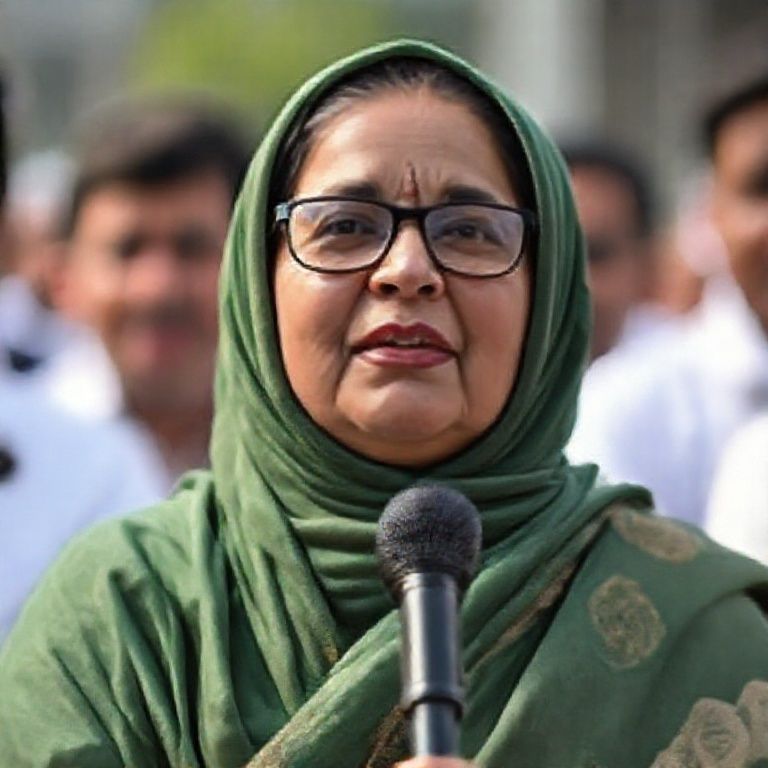
Former Prime Minister of Bangladesh, Sheikh Hasina, has publicly responded to a recent death sentence handed down by the International Crimes Tribunal. The tribunal found her guilty of "crimes against humanity," a ruling that Hasina vehemently contests. She describes the decision as politically motivated, asserting that it is part of a broader scheme to undermine her legacy and her party's influence in Bangladesh.
Hasina's reaction comes in the wake of significant political turmoil in Bangladesh. The August 2024 student protests marked a pivotal moment, leading to her government's downfall. In her statements, Hasina emphasizes that these protests were not a premeditated assault against her administration. Instead, she argues that they were a spontaneous expression of public discontent.
In her defense, Hasina insists on the importance of facing charges in a legitimate court. She believes that the tribunal's ruling lacks credibility and fairness. Hasina highlights her government's achievements in human rights and economic growth as evidence of her commitment to the welfare of the Bangladeshi people.
Political Context
The political landscape in Bangladesh has been fraught with tension. Hasina's party, the Awami League, has faced increasing opposition from various factions. The student protests in August 2024 were a culmination of widespread dissatisfaction with her administration. Many young people took to the streets, demanding accountability and reform.
Hasina's government has often been accused of suppressing dissent and curtailing freedoms. Critics argue that her administration has used state power to silence opposition voices. In this context, the tribunal's ruling against her has sparked intense debate. Supporters of Hasina view the ruling as an attack on democracy, while her opponents see it as a necessary step toward justice.
Human Rights Achievements
Despite the controversies surrounding her leadership, Hasina points to several human rights achievements during her tenure. She claims that her government has made significant strides in improving the lives of marginalized communities. Initiatives aimed at women's empowerment and poverty alleviation are often highlighted as key successes.
Hasina's administration has also focused on economic growth. Under her leadership, Bangladesh has experienced notable advancements in various sectors. The country has seen improvements in infrastructure, education, and healthcare. These developments, according to Hasina, demonstrate her commitment to the nation's progress.
International Reactions
The international community has closely monitored the situation in Bangladesh. Various human rights organizations have expressed concern over the tribunal's ruling and the implications it holds for democracy in the country. Many observers fear that the ruling could further polarize the political landscape.
Some foreign governments have called for a fair and transparent judicial process. They emphasize the need for accountability while also urging respect for human rights. The delicate balance between justice and political stability remains a critical issue in Bangladesh.
Public Sentiment
Public opinion in Bangladesh is deeply divided. Supporters of Hasina rally behind her, viewing her as a symbol of resilience against political oppression. They argue that the tribunal's ruling is an attempt to erase her contributions to the nation.
Conversely, her critics believe that the ruling is a necessary step toward accountability. They argue that no one should be above the law, regardless of their political stature. This division reflects the broader societal tensions that have characterized Bangladeshi politics in recent years.
Future Implications
The implications of the tribunal's ruling extend beyond Hasina herself. The political climate in Bangladesh is likely to remain volatile as various factions vie for power. The Awami League's response to the ruling will be crucial in shaping the future of the party and the nation.
As Hasina continues to assert her innocence, the legal battles ahead will be closely watched. The outcome of these proceedings could have far-reaching consequences for Bangladesh's political landscape.
In the meantime, Hasina's supporters remain steadfast. They continue to advocate for her leadership and the policies she has implemented. The ongoing discourse surrounding her case highlights the complexities of justice, politics, and public sentiment in Bangladesh.
As the situation unfolds, the world watches closely. The intersection of law and politics in Bangladesh serves as a reminder of the challenges faced by democracies worldwide. The coming months will be critical in determining the trajectory of both Hasina's legacy and the future of Bangladesh.
Source:


