How AI and Social Media Contribute to ‘Brain Rot’
News THE ECONOMIC TIMES, livelaw.in, LAW, LAWYERS NEAR ME, LAWYERS NEAR BY ME, LIVE LAW, THE TIMES OF INDIA, HINDUSTAN TIMES, the indian express, LIVE LAW .INExperts warn that excessive use of AI-curated content and social media algorithms is reshaping human attention, memory, and emotional health — creating what neuroscientists now call digital “brain rot.”
New Delhi, November 11, Tuesday, 2025
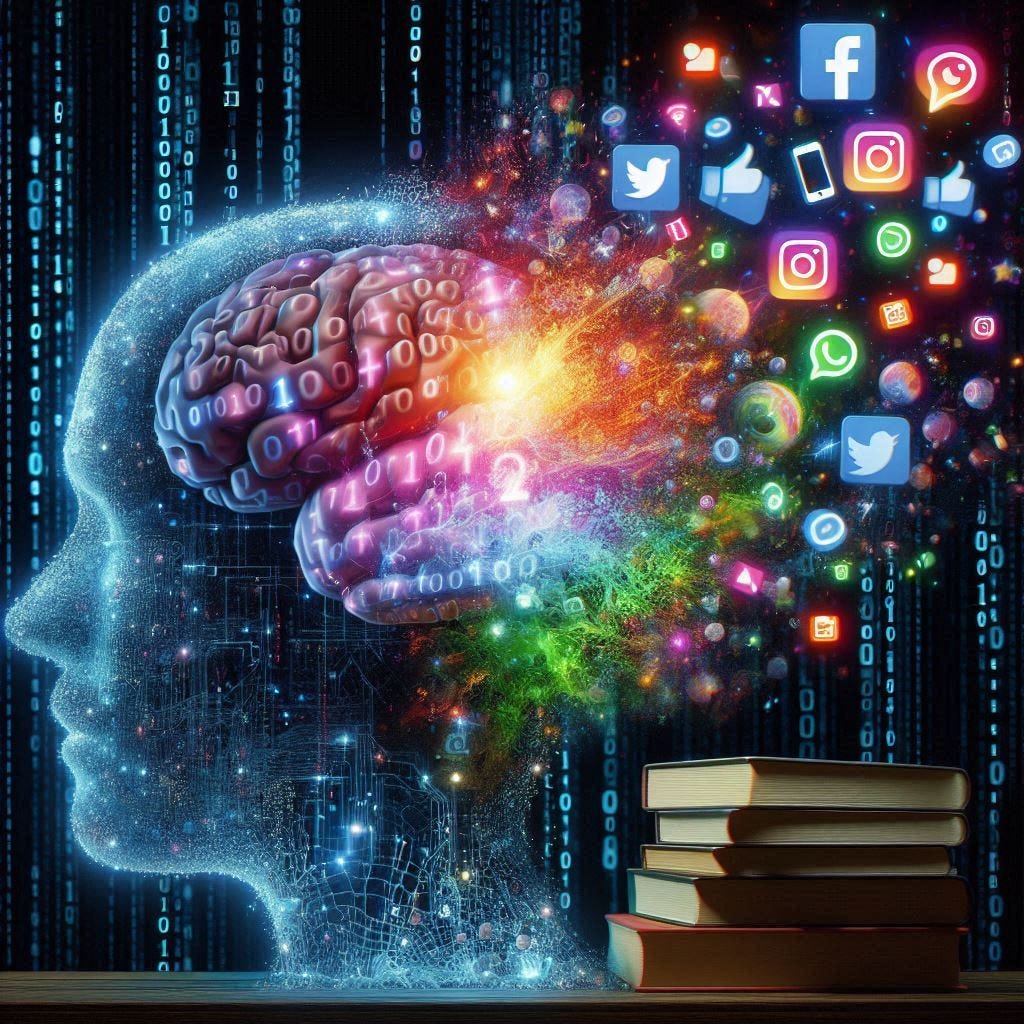
A growing number of neuroscientists, psychologists, and digital behavior experts are raising alarms over a disturbing modern phenomenon: “brain rot” — a condition linked to the constant overstimulation caused by artificial intelligence and social media algorithms.
Once seen as mere distractions, platforms powered by AI are now rewiring human cognition, shortening attention spans, and eroding critical thinking skills. The combination of algorithmic content recommendation, endless scrolling, and dopamine-driven engagement loops is being compared to a form of digital addiction that’s changing how the human brain functions.
The Science Behind Digital Brain Rot
According to researchers at the National Institute of Mental Health and Neurosciences (NIMHANS), the average human attention span has fallen to just 6.5 seconds — shorter than that of a goldfish. AI-driven content feeds, designed to maximize engagement, bombard users with rapid, emotionally charged stimuli, forcing the brain into a constant state of low-effort consumption.
“AI is training the human brain to crave novelty, not knowledge,” said Dr. Ananya Rao, a cognitive neuroscientist at NIMHANS. “When every scroll gives you a new reward, your brain stops seeking depth. It seeks dopamine.”
She explains that every “like,” “share,” or “AI-generated video recommendation” activates the brain’s reward center, releasing dopamine in bursts. Over time, this repetitive cycle dulls the prefrontal cortex — the region responsible for focus, reasoning, and impulse control.
How AI Accelerates the Cycle
Artificial intelligence plays a pivotal role in fueling this mental decline. Social platforms such as Instagram, TikTok, and YouTube rely on AI-driven algorithms that analyze user behavior to predict and serve content that maximizes screen time.
“These recommendation models exploit what psychologists call ‘variable reward systems,’” said Dr. Mark Singh, behavioral AI researcher at the Indian Institute of Technology (IIT) Bombay. “You never know when you’ll see something exciting — so you keep scrolling. It’s the same mechanism that drives slot machines.”
Recent studies show that these algorithms are becoming more advanced, using reinforcement learning to personalize every user’s digital experience. The more data an AI collects, the better it becomes at understanding a person’s emotional triggers — and the harder it becomes for users to disconnect.
Social Media’s Role in Cognitive Decline
The problem isn’t just overstimulation; it’s mental fragmentation. Constant content switching prevents the brain from entering a focused cognitive state — essential for memory formation and problem-solving.
“Each time you jump from a meme to a news clip to an AI-generated reel, your brain resets its focus,” said Dr. Priya Menon, a psychologist at the Centre for Digital Wellness. “Do that 200 times a day, and your neural pathways start favoring distraction over concentration.”
This phenomenon, she added, has led to measurable drops in academic and workplace productivity. Many young adults now struggle with digital fatigue, low attention tolerance, and information overload — symptoms commonly associated with early cognitive burnout.
AI-Generated Content and Emotional Numbness
The explosion of AI-generated entertainment — from hyperrealistic avatars to AI influencers and chatbots — is further amplifying the crisis. Constant interaction with artificially perfect or emotionally manipulative content is distorting users’ sense of reality and empathy.
“When people spend hours interacting with AI companions or curated perfection, real human interactions start to feel dull or demanding,” said Dr. Reema Tiwari, digital sociologist at Delhi University. “We’re seeing emotional flattening — a kind of social numbness caused by AI overstimulation.”
Experts argue that the illusion of social connection created by algorithms gives users comfort while simultaneously deepening loneliness. A 2025 study by the World Health Organization (WHO) linked excessive social media and AI use to increased anxiety, sleep disruption, and cognitive decline among adolescents and young adults.
The Generational Impact: Teens Most Vulnerable
Teenagers are disproportionately affected because their brains are still developing. According to a joint study by Harvard and Stanford Universities, teens who spend over 4 hours daily on AI-curated social media feeds show reduced activity in the anterior cingulate cortex — the brain area responsible for emotional regulation and decision-making.
“AI doesn’t just capture attention; it reshapes brain development,” said Dr. Arjun Patel, lead author of the study. “Teens raised on algorithmic content are showing early signs of cognitive fragmentation — a dependence on instant stimulation.”
As platforms roll out AI companions and generative chat features, experts fear a new wave of algorithm-induced social isolation, where young users form attachments to artificial entities at the cost of real relationships.
Breaking the Brain Rot Loop
Experts recommend practical steps to combat digital cognitive fatigue:
- Set screen time boundaries and schedule offline hours.
- Use AI-free modes or “Focus Mode” on apps to minimize algorithmic feeds.
- Practice deep work — focusing on a single task for 25–45 minutes without digital interference.
- Engage in mindfulness activities such as journaling or physical exercise to reset dopamine balance.
- Avoid checking notifications within the first hour of waking or the last hour before sleep.
“Digital hygiene should be treated as a health priority,” said Dr. Menon. “AI isn’t evil — it’s addictive by design. Awareness is the first line of defense.”
AI Ethics and the Future of Digital Well-Being
Industry leaders are beginning to respond. Tech giants like Meta, Google, and OpenAI have pledged to develop “humane algorithms” — AI systems designed to promote mental health, not exploit it.
However, experts remain skeptical. “Unless profit models change, algorithms will continue optimizing for engagement, not well-being,” warned Dr. Singh.
Global regulators, including the European Union’s AI Safety Board and India’s Ministry of Electronics and IT (MeitY), are evaluating ethical frameworks to require transparency in recommendation algorithms and limit manipulative AI behavior.
“The battle against brain rot isn’t just personal — it’s systemic,” Dr. Tiwari noted. “We need digital policies that protect cognition the way pollution laws protect air quality.”
A Race Between Technology and the Human Mind
As artificial intelligence grows more persuasive and personalized, the challenge for humanity isn’t just keeping up — it’s staying conscious.
Experts agree that the future depends on how societies balance AI innovation with mental sustainability.
“The real question,” said Dr. Rao, “is whether our brains can adapt as fast as our algorithms evolve.”
For now, the cure for digital brain rot may not lie in more technology — but in reclaiming attention, one thought at a time.
Source:


