‘Israel Can’t Fight the World, Bibi’: Trump Reveals How He Brokere
News THE ECONOMIC TIMES, livelaw.in, LAW, LAWYERS NEAR ME, LAWYERS NEAR BY ME, LIVE LAW, THE TIMES OF INDIA, HINDUSTAN TIMES, the indian express, LIVE LAW .IN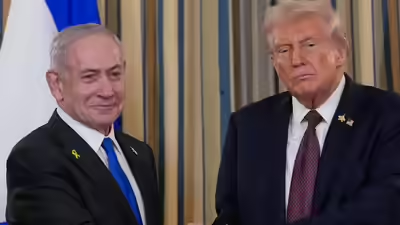
In a candid recount of his phone call with Israeli Prime Minister Benjamin Netanyahu, US President Donald Trump details how he urged Israel to accept global consensus and agree to a ceasefire with Hamas.
Washington D.C. / Jerusalem — Thursday, October 9, 2025
‘Israel Can’t Fight the World, Bibi’: How Trump Struck Gaza Deal
In a striking revelation that has reignited debates across diplomatic and media circles, United States President Donald Trump disclosed details of his crucial conversation with Israeli Prime Minister Benjamin Netanyahu, during which he reportedly told the Israeli leader: “Israel can’t fight the world, Bibi.”
The statement, which Trump shared while announcing a breakthrough Gaza ceasefire deal, is being seen as a moment that may have tipped the scales in one of the most turbulent phases of the Middle East conflict in recent years.
According to multiple international media outlets, including Reuters, AP, and The Times of Israel, Trump recounted the moment as part of his broader diplomatic campaign to secure a multi-phase peace plan between Israel and Hamas — an initiative his administration has branded as “the first real step toward sustainable stability in Gaza.”
Behind the Scenes of the Ceasefire
Sources close to the negotiation table revealed that the agreement — which Trump called “Phase One of the Gaza Peace Framework” — involves a partial withdrawal of Israeli forces from northern Gaza, a limited prisoner exchange, and the facilitation of humanitarian aid under UN supervision.
In return, Hamas agreed to cease rocket fire and allow international monitoring in Gaza’s transitional zones.
The discussions reportedly took place over several intense weeks in Cairo and Doha, with the involvement of Egyptian, Qatari, and U.S. envoys. Trump emphasized that “the world was watching,” and said he warned both sides that the humanitarian situation was “unacceptable” and that further resistance would isolate them globally.
“I told Bibi very clearly — Israel cannot fight the entire world. It’s time to make peace,” Trump said during a White House briefing. “And he understood. It wasn’t easy, but we got there.”
Netanyahu’s Calculated Shift
Prime Minister Netanyahu’s office has confirmed that discussions with Washington intensified following global pressure over civilian casualties and infrastructure destruction in Gaza.
Facing mounting international criticism and growing discontent from within Israel’s political spectrum, Netanyahu’s government reportedly viewed the U.S.-led plan as a necessary pause rather than a full stop.
Political analysts suggest that Trump’s persuasive tone and the potential threat of losing broader Western backing were instrumental in securing Israel’s reluctant agreement.
“Trump’s message was pragmatic and political,” said Dr. Yael Cohen, a senior fellow at the Herzliya Policy Institute. “Netanyahu realized that continued resistance would alienate not just the U.S. but also key European and Arab allies.”
Global Reaction and Diplomatic Ripples
The Gaza ceasefire announcement has been met with a mix of cautious optimism and skepticism.
While the United Nations and European Union welcomed the development as a “positive step toward de-escalation,” several human rights groups remain wary, warning that “short-term truces have repeatedly collapsed without addressing core grievances.”
Hamas political leader Ismail Haniyeh, speaking from Doha, confirmed the ceasefire but urged “international partners to ensure Israel’s compliance.”
“We are committed to peace if Israel adheres to the agreed terms,” Haniyeh said. “The people of Gaza have suffered enough.”
Meanwhile, Israel’s far-right coalition partners criticized Netanyahu for “bowing to foreign pressure,” accusing him of compromising national security for diplomatic optics.
Trump’s Diplomatic Gamble
This marks Trump’s most significant foreign policy achievement since returning to the White House. His administration is positioning the Gaza deal as evidence of his “art of diplomacy,” reminiscent of his earlier Abraham Accords framework.
A senior White House official told The Washington Post that Trump personally intervened “dozens of times” through late-night calls, shuttle diplomacy, and direct video negotiations with both sides.
The President reportedly told his staff, “We are not just ending a war — we’re resetting history in the Middle East.”
However, critics argue that Trump’s deal is largely tactical, designed to stabilize tensions ahead of the U.S. elections while avoiding deeper structural reforms in the region.
Foreign policy commentators note that the ceasefire, while meaningful, still lacks a roadmap for governance in Gaza, leaving uncertainty over who will control reconstruction, security, and border regulation.
The Regional Equation
Egypt’s foreign minister, Sameh Shoukry, hailed the deal as a “vital humanitarian breakthrough,” while Qatar’s Prime Minister Mohammed bin Abdulrahman Al Thani stressed that “implementation will be the true test.”
Arab League sources confirmed that a regional monitoring committee is being formed to oversee the ceasefire terms, while the UN is expected to deploy observers along Gaza’s northern border zones.
At the same time, Iran and Hezbollah have denounced the agreement, calling it a “temporary Western maneuver.” Tehran-based state media accused Washington of “rebranding occupation through diplomacy.”
Israel’s Global Isolation and the Turning Point
Trump’s remark — “Israel can’t fight the world” — captures a rare moment of candid U.S. pressure on a key ally. For decades, Israel has enjoyed broad Western support, but the ongoing humanitarian crisis in Gaza has shifted global sentiment sharply.
Several European nations had hinted at potential sanctions and arms restrictions, while widespread protests across London, Paris, and New York demanded an immediate ceasefire.
“Trump understood that Israel’s moral capital was running out,” said Middle East analyst Kareem Al-Rawi. “By reframing the narrative, he’s trying to balance U.S. loyalty to Israel with global accountability.”
A Fragile Hope
As celebrations and skepticism coexist, the reality on the ground in Gaza remains grim. Infrastructure damage is severe, displacement is widespread, and humanitarian agencies are warning of “a long road to recovery.”
Whether Trump’s deal marks the beginning of lasting peace or just another temporary pause in decades of bloodshed will depend on how both sides — and the world — choose to move forward.
For now, the U.S. President appears determined to claim victory.
“This is the deal that nobody thought possible,” Trump declared. “But we made it happen. Because at the end of the day, peace is stronger than politics.”
Source:


